
Quick Answer:
The 2007 to 2011 CR-V has the most notable history of compressor clutch and internal failures. Severe internal wear can create what technicians call “black death,” which requires more extensive repairs than a simple compressor replacement. Later CR-V models are generally more reliable, though refrigerant types and compressor designs have changed. A typical compressor replacement costs about $700 to $1,200, while repairs involving contamination can cost considerably more.
*By the AC Specialists at R & Y A/C Compressors | Family-owned and operated in Miami, FL since 1989 | Last updated: July 2026*
If your Honda CRV AC compressor is failing, the problem may involve more than the compressor itself. Clutch wear, refrigerant leaks, electrical faults, and internal compressor damage can all cause AC problems. On some older CR-V models, an internal failure can spread debris throughout the entire system.
Common Honda CR-V AC Compressor Problems by Generation
3rd Generation: 2007 to 2011
The third-generation CR-V uses R-134a and has several common compressor concerns.
Compressor clutch failure: A worn bearing can become noisy, while a damaged coil can prevent the compressor from engaging.
Internal compressor failure: Severe wear can produce metal and seal debris that travels through the AC system.
Relay and electrical problems: A failed relay or circuit can prevent a good compressor from operating. Our compressor not turning on guide covers common causes.
4th Generation: 2012 to 2016
The fourth-generation CR-V improved in overall compressor reliability. Older vehicles can still experience clutch bearing wear, condenser damage, and refrigerant leaks.
Road debris can damage the condenser, while aging hose crimps and seals can allow refrigerant to escape.
5th Generation: 2017 to 2022
The fifth-generation CR-V introduced newer AC components and, on later models, R-1234yf refrigerant. Always check the underhood label because refrigerant specifications can vary by model year.
Electrical and pressure sensor problems can sometimes mimic compressor failure. Condenser leaks can also cause gradual loss of cooling.
6th Generation: 2023 and Newer
The current CR-V uses R-1234yf refrigerant. The CR-V Hybrid also uses a high-voltage electric compressor.
Unlike a conventional compressor, the hybrid unit does not use a belt or magnetic clutch. It requires POE oil and hybrid-specific service procedures. Our hybrid electric compressor guide explains why the correct oil and equipment matter.
What Is Black Death and Why CR-V Owners Should Care
“Black death” is a term used for severe internal AC compressor contamination. As a compressor wears internally, seal material and metal can break down into dark debris that travels throughout the system.
This is especially important when repairing an older CR-V with a failed compressor. Replacing only the compressor may not solve the problem if debris remains in the system.
A contaminated system may require:
New compressor
New condenser
New receiver/drier
New expansion valve
System flush
Correct replacement oil
Modern parallel-flow condensers can be difficult to clean completely after severe contamination. Replacing a contaminated condenser can be a better option than attempting to flush trapped debris.
Our guide explains how to flush a car AC system after compressor failure.
Symptoms of a Failing CR-V AC Compressor
Watch for these common warning signs:
Warm air from the vents
Grinding, whining, or growling near the engine
Compressor clutch that does not engage
Cooling that becomes inconsistent when the engine gets hot
Compressor cycling on and off frequently
A sudden loud noise followed by loss of cooling
A worn clutch can stop engaging as temperatures increase. A low refrigerant charge can also cause rapid cycling.
If you hear a loud mechanical noise followed by warm air, turn the AC off and have the system inspected. Our guide to signs your car needs a new AC compressor covers additional symptoms.
Diagnosing Honda CR-V AC Problems
Start with the simple electrical checks. Inspect the AC fuse and relay in the underhood fuse box. On older models, an identical relay can sometimes be swapped temporarily for testing.
Next, command the AC on and watch the compressor clutch. If it does not engage, check for voltage at the clutch connector and test the coil. A reading around 3 to 5 ohms is common for many clutch coils, though specifications vary by compressor.
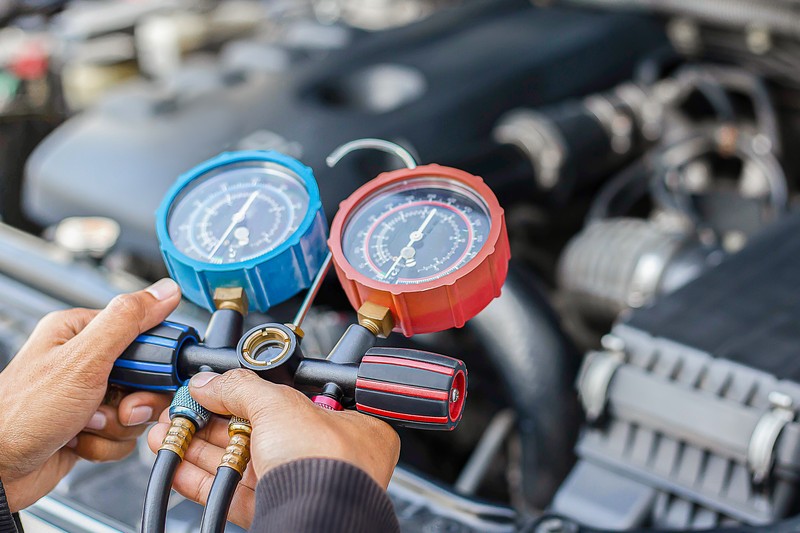
Pressure testing can reveal refrigerant and compressor problems. For an R-134a CR-V at around 90°F, readings may be approximately 25 to 35 psi on the low side and 200 to 250 psi on the high side. Actual readings vary based on temperature and vehicle specifications.
Low pressure on both sides can indicate an undercharged system. If the compressor is running but pressures remain nearly equal, the compressor may not be pumping correctly. Very high high-side pressure can indicate condenser airflow problems or an overcharged system.
Inspect the system for contamination if the compressor has failed internally. Black or gray debris around the suction line or other components can indicate severe compressor wear.
A leak test should also cover the condenser, compressor seal, hose connections, and evaporator drain.
Honda CR-V AC Compressor Replacement Cost
Typical costs include:
Remanufactured compressor: $200 to $420
New compressor: $350 to $700
Receiver/drier: $30 to $80
Expansion valve: $30 to $70
Condenser: $120 to $300
Flush supplies: $30 to $60
R-134a refrigerant and oil: $50 to $100
R-1234yf refrigerant and oil: $150 to $300
Labor: $300 to $600
A straightforward compressor repair can cost approximately $700 to $1,200 at an independent shop. If internal compressor failure has contaminated the system, a condenser replacement and system flush can raise the total to approximately $1,300 to $1,900.
Hybrid compressor repairs can cost more because of the specialized equipment and high-voltage service requirements.
DIY Cost
Parts for a complete R-134a repair can cost approximately $350 to $700, depending on the compressor and components selected. Refrigerant recovery is required before opening the system.
High-voltage CR-V Hybrid AC systems should be serviced by technicians trained to work on hybrid systems.
Tips for a Repair That Lasts
A compressor replacement should address the reason the original compressor failed.
Replace the receiver/drier when appropriate, and replace the expansion valve after an internal compressor failure. If debris has entered the system, inspect the condenser and flush the components that can safely be cleaned.
Always use the correct refrigerant for the vehicle. Late fifth-generation models and newer CR-Vs may use R-1234yf, so check the underhood label before purchasing refrigerant.
Oil quantity is also important. Our remanufactured compressors arrive pre-oiled with the correct oil type and quantity for the application.
After installation, the system should be evacuated properly and charged by weight according to the manufacturer’s specification.
A complete compressor kit can also simplify the repair by combining the main replacement components.
Get Your Honda CR-V AC Compressor from R & Y A/C Compressors
At R & Y A/C Compressors, we stock new and remanufactured AC compressors for Honda CR-V models, along with condensers, driers, expansion valves, and complete compressor kits. We are a family-owned company in Miami, and we have been serving customers since 1989.
Every remanufactured compressor we sell is 100% tested and backed by a warranty. Enter your year, make, and model at rycompressors.com to find the right compressor and related components for your CR-V. You can also contact us directly, and we can help you select the right parts for your repair.
Frequently Asked Questions
A typical shop replacement with a remanufactured compressor costs about $700 to $1,200. If the old compressor contaminated the system, condenser replacement and flushing can increase the repair to $1,300 to $1,900.
The 2007 to 2011 third-generation CR-V has a stronger history of compressor clutch and internal failure problems. Later generations can still experience compressor wear, leaks, and electrical issues.
Black death describes severe compressor wear that produces dark debris and sludge throughout the AC system. A proper repair may require a compressor, condenser, drier, expansion valve, and system flush.
No. The 2023 and newer CR-V Hybrid uses a high-voltage electric compressor without a traditional belt or clutch. It requires the correct POE oil and specialized service procedures.
Yes, if the compressor itself is still healthy and the problem is limited to the clutch, bearing, or coil. If the compressor has internal damage or has produced debris, replacing the complete compressor and contaminated components is usually necessary.
Possible causes include a worn clutch air gap, low refrigerant, a failing relay, or compressor wear. Proper electrical and pressure testing can identify the cause before replacement parts are purchased.