
By the Power Steering and A/C Specialists at R & Y A/C Compressors | Family-owned and operated in Miami, FL since 1989 | Last updated: October 2026
Quick Summary
The 2011 to 2020 Dodge Charger and the 2011 to 2014 Chrysler 300 with the 3.6L V6 or 5.7L Hemi steer with an electro-hydraulic power steering pump, where a 12-volt motor spins the pump instead of an engine belt. When it starts to go, you get a whine, heavy steering in parking lots, assist that comes and goes and a steering warning light, but low fluid, a blown pump fuse and a weak battery cause many of those complaints. If the pump really is worn out, R & Y’s remanufactured AD-0102E pump fits both cars for about $410, and a shop needs 1.5 to 3 hours to install and bleed it.
Table of Contents
- Which Chargers and 300s Use an Electric Power Steering Pump
- Common Charger and 300 Power Steering Pump Problems
- Symptoms and What They Usually Mean
- Diagnosing the Problem Before You Buy a Pump
- R & Y Fitment: Which Pump Fits Your Charger or 300
- Replacing the Pump: Steps and Tips
- Dodge Charger Power Steering Pump Replacement Cost
- Frequently Asked Questions
- Get Your Charger or 300 Power Steering Pump from R & Y A/C Compressors
Yes. The 2011 to 2020 Charger with the 3.6L V6 or 5.7L Hemi uses an electro-hydraulic pump, where an electric motor drives a hydraulic pump with no belt, and the 2011 to 2014 Chrysler 300 shares it. If you have a 2006 to 2010 Charger, yours has a belt-driven pump, so order by year before anything else.
You can, but it takes much more effort to turn the wheel at low speed. Driving it to a shop is fine. Just do not put the repair off, because losing assist in the middle of a tight turn is a real safety risk.
Use exactly the fluid listed on the reservoir cap or in your owner’s manual. Electro-hydraulic systems are picky about fluid, and a generic or mixed fluid can cause whine, overheating and early failure. If the cap is hard to read, a dealer parts counter can look it up by VIN.
Parking is when the pump works hardest, so a low fluid level, a weak battery or a hot pump in thermal cutback shows up there first. Check the fluid cold, load-test the battery and scan the steering module. If all of that is fine and the pump still whines or cuts back, it is wearing out.
No, AD-0102E is listed only for the 2011 to 2020 Charger 3.6L and 5.7L and the 2011 to 2014 Chrysler 300 3.6L and 5.7L. SRT 6.4L, Hellcat 6.2L and 2015 and newer 300 models are not listed under this part number, so search your vehicle on rycompressors.com or call us with your VIN before you order.
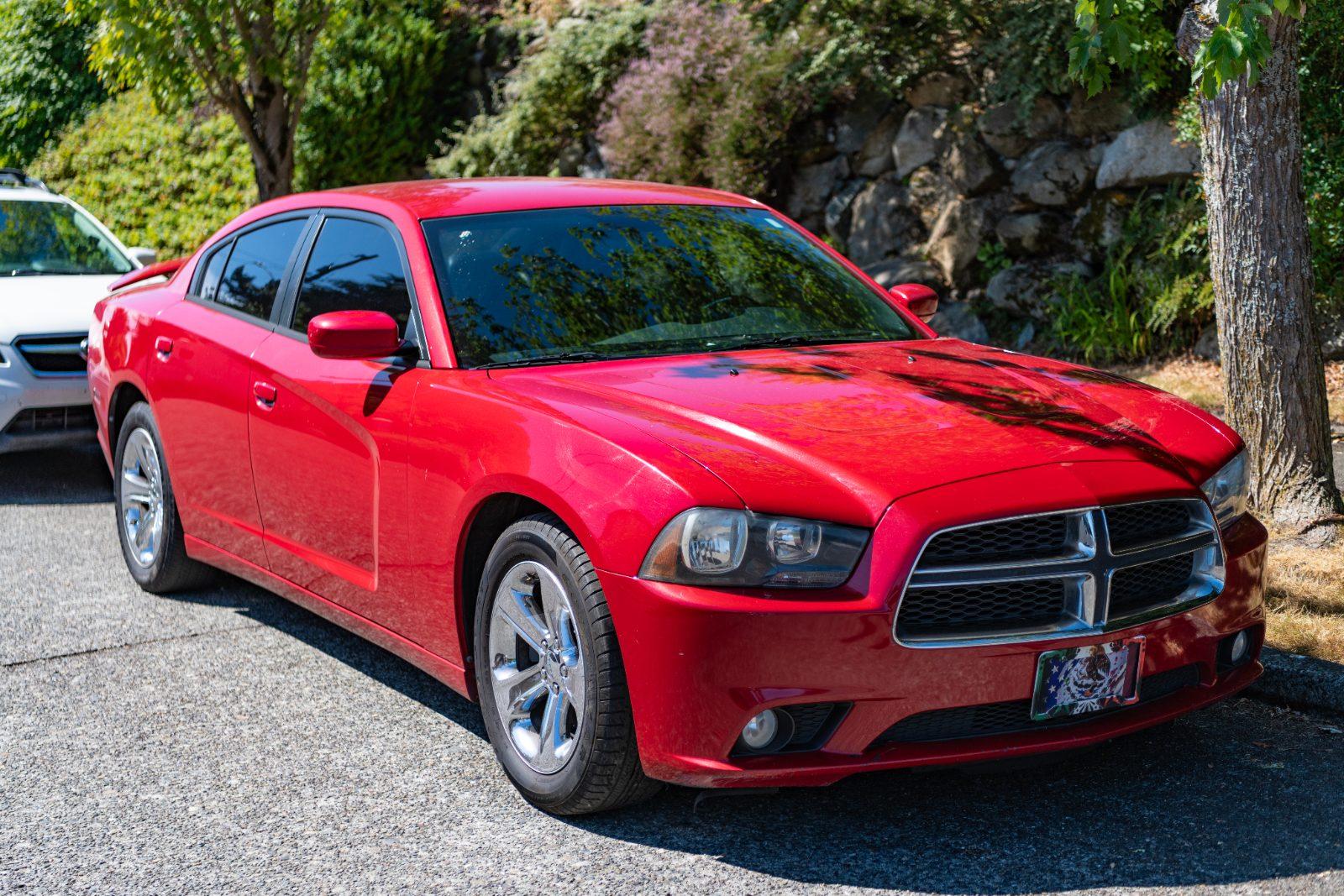
With the 2011 redesign, the Dodge Charger power steering pump went from a belt-driven unit to an electric one, and the Chrysler 300 got the same change. It works hard pushing a 4,000-plus-pound sedan around a parking lot, and when it gets tired you feel it right away in the wheel.
Most steering complaints on these cars come down to low or aerated fluid, a weak battery, a blown fuse, a corroded connector or a worn pump. Below we cover how to tell which one you have, which R & Y part fits and what the repair should cost.
Which Chargers and 300s Use an Electric Power Steering Pump
When Chrysler redesigned the LX platform for 2011 (the Charger became the LD body and the 300 moved to its second generation), the belt-driven pump went away. Both the 3.6L Pentastar V6 and the 5.7L Hemi got an electro-hydraulic power steering (EHPS) unit: a 12-volt motor, hydraulic pump, reservoir and control electronics in one assembly, mounted low at the front of the car.
The steering rack is still a regular hydraulic rack. The controller reads vehicle speed over the CAN network and adjusts assist to match, and our article on electric vs. hydraulic power steering explains how that compares with the older setup.
The 2006 to 2010 Charger and 2005 to 2010 300 use a belt-driven pump, which is a different part. The 2011 to 2020 Charger and 2011 to 2014 300, in both 3.6L and 5.7L form, share the electro-hydraulic pump R & Y covers with AD-0102E. SRT, Hellcat and 2015 and newer 300 models are covered in the fitment section below.
Common Charger and 300 Power Steering Pump Problems
These pumps usually give warning before they quit. For a general look at the early signs on any car, see our guide to the signs of a failing electric power steering pump.
Low Fluid and Aeration
The reservoir sits on the pump under the car, where hardly anyone looks. A small weep at a hose fitting or reservoir seam drops the level a little at a time. Once the pump starts pulling air, you get a whine that climbs as you turn, foamy fluid and extra heat. A pump that runs aerated or dry, even for a short time, will not last long.
Thermal Cutback
The controller cuts back assist when the pump gets hot, like after a long drive, in stop-and-go traffic on a 95°F day or after a lot of idling. Owners usually say the steering got heavy for a while and then came back. Police Chargers that idle for hours can be more prone to it. If it happens often, look at low fluid, old fluid or a worn motor.
Low Voltage, Blown Fuse and Connector Corrosion
At parking speeds the pump pulls heavy current through a large fuse in the engine-bay fuse box. A tired battery or low charging voltage can trigger reduced assist and a warning light even when the pump is fine, and a blown fuse means no assist at all. Road salt that reaches the connector causes on-and-off assist and random warning lights.
Motor or Controller Failure
Often past 100,000 miles, the pump motor or the built-in controller wears out. Signs include a warning light with heavy steering that stays heavy, no pump hum when you turn the key, or a pump that runs flat out no matter what the wheel is doing.
Symptoms and What They Usually Mean
| Symptom | Most Likely Cause | First Thing to Check |
|---|---|---|
| Whine or groan that rises when turning | Low or aerated fluid | Fluid level and foam in the reservoir |
| Steering heavy only at parking speeds | Thermal cutback, weak pump, low voltage | Battery and charging voltage, fluid level |
| Assist comes and goes while driving | Connector corrosion, low voltage, failing controller | Connector condition, codes in the steering module |
| Steering wheel warning icon or “Service Power Steering” style message | Any pump fault, voltage fault, CAN communication loss | Scan for codes, battery test |
| No assist and no pump noise at key-on | Blown pump fuse, failed motor | High-amp fuse in the engine-bay fuse box |
| Fluid puddle under the front of the car | Leaking hose fitting, reservoir seam or pump seal | Visual inspection with the splash shield off |
Losing assist does not take away your steering, but effort at low speed goes up a lot, so get it looked at soon.
Diagnosing the Problem Before You Buy a Pump
A pump costs $400 or more, so spend 30 minutes making sure it is really the problem.
- Scan for codes with a tool that reads the power steering module, not just engine codes. Voltage or communication codes point away from the pump.
- Test the battery and charging system. Look for 12.4 to 12.6 volts at rest and 13.5 to 14.5 volts with the engine running. A battery that fails a load test is one of the most common causes of “steering problems” on these cars.
- Check the pump fuse. Find the high-amp cartridge fuse in the engine-bay fuse box (the owner’s manual has the chart) and test it with a meter.
- Check the fluid properly. Raise the car, remove the splash shield and check the level cold against the reservoir marks. Look for foam or milky fluid, and for wet spots at the fittings, reservoir seam and pump body.
- Listen to the pump. You should hear a short hum at key-on as it primes. With the engine running, turn lock to lock and listen for grinding or a sharp whine.
- Inspect the connector. Unplug it and look for corrosion, bent pins and water, then clean it and plug it back in firmly.
- Rule out the rack. Torn boots, a leaking rack or a rack that binds in part of its travel can feel a lot like a pump problem.
If all of that checks out and the pump still whines, cuts out or sets codes, the pump is the problem. It is also worth running your VIN through the NHTSA recall lookup first, in case an open recall covers your car.

R & Y Fitment: Which Power Steering Pump Fits Your Charger or 300
R & Y covers these cars with one part number. Each remanufactured unit is tested for noise, leaks and durability, is covered by our limited warranty and carries a refundable core charge, so send your old pump back.
| R & Y Part # | Vehicle | Years | Engines | Notes |
|---|---|---|---|---|
| AD-0102E | Dodge Charger | 2011–2020 | 3.6L V6, 5.7L V8 | Remanufactured, about $410; crosses to OE 68059524 (AB through AP) and 68059525 (AB through AL) |
| AD-0102E | Chrysler 300 | 2011–2014 | 3.6L V6, 5.7L V8 | Same unit as the Charger |
Not listed under AD-0102E. Search your year, make and model on our site or call us with your VIN for these:
- Charger and 300 SRT 6.4L, and Charger Hellcat 6.2L supercharged
- 2015 and newer Chrysler 300
- 2006 to 2010 Charger and 2005 to 2010 300 (belt-driven pump, different part)
Programming: These units typically install without programming, but confirm it for your VIN.
Sister car: The 2011 to 2014 Dodge Challenger uses a related pump, AD-0103E, which does not cover SRT models. See our Dodge Challenger electric power steering pump guide for that car.
Replacing the Pump: Steps and Tips
This is a moderate DIY job if you can get the car safely in the air. Plan on 2 to 3 hours the first time, including bleeding. You will need the pump, 1 to 2 quarts of the fluid listed on your reservoir cap or in the owner’s manual, a drain pan, dielectric grease, metric sockets and a torque wrench.
- Disconnect the negative battery cable.
- Raise and support the car and remove the lower splash shield.
- With a drain pan in place, disconnect the return hose, then the high-pressure line. Expect about a quart of fluid.
- Unplug the connector, remove the mounting bolts and lower the pump out.
- Install the remanufactured pump, torque the mounts, and reconnect the lines with new seals where supplied.
- Clean the connector, add dielectric grease and plug it in until it clicks.
- Fill the reservoir to the cold mark and reconnect the battery.
- Bleed: with the front wheels off the ground, key on (or engine running, depending on the procedure for your year), turn the wheel slowly lock to lock 10 to 15 times. Check the level, top it up and repeat until the fluid is free of foam and the whine is gone. Never let the level drop below the minimum mark.
- Reinstall the splash shield, clear codes and test drive.
Three things decide whether the repair lasts. Use the fluid on the cap, because the wrong fluid causes whine, heat and early failure. Fix the leak that emptied the reservoir, or the new pump will go the same way. And replace a marginal battery, since it will keep triggering reduced-assist events no matter how good the pump is.
While the car is in the air, take a look at the A/C compressor too. If it is noisy, our A/C compressor bearing noise guide walks through what to check.
Dodge Charger Power Steering Pump Replacement Cost
| Item | Remanufactured (R & Y) | New OE (Dealer) |
|---|---|---|
| Electro-hydraulic pump | About $410 | $700 – $1,800 |
| Power steering fluid | $20 – $60 | $20 – $60 |
| Labor (1.5 – 3 hours) | $150 – $450 | $150 – $450 |
| Programming | Typically not required | Typically not required |
| Typical shop total | $580 – $920 | $870 – $2,310 |
Doing it yourself, you are looking at about $430 to $470 in parts and fluid, and you get the core charge back when you return the old pump. For what shops charge on other cars, see our power steering pump replacement cost guide. And if the real problem was a weak battery or a corroded connector, a new pump will not fix it.
Frequently Asked Questions
Yes. The 2011 to 2020 Charger with the 3.6L V6 or 5.7L Hemi uses an electro-hydraulic pump, where an electric motor drives a hydraulic pump with no belt, and the 2011 to 2014 Chrysler 300 shares it. If you have a 2006 to 2010 Charger, yours has a belt-driven pump, so order by year before anything else.
You can, but it takes much more effort to turn the wheel at low speed. Driving it to a shop is fine. Just do not put the repair off, because losing assist in the middle of a tight turn is a real safety risk.
Use exactly the fluid listed on the reservoir cap or in your owner’s manual. Electro-hydraulic systems are picky about fluid, and a generic or mixed fluid can cause whine, overheating and early failure. If the cap is hard to read, a dealer parts counter can look it up by VIN.
Parking is when the pump works hardest, so a low fluid level, a weak battery or a hot pump in thermal cutback shows up there first. Check the fluid cold, load-test the battery and scan the steering module. If all of that is fine and the pump still whines or cuts back, it is wearing out.
No, AD-0102E is listed only for the 2011 to 2020 Charger 3.6L and 5.7L and the 2011 to 2014 Chrysler 300 3.6L and 5.7L. SRT 6.4L, Hellcat 6.2L and 2015 and newer 300 models are not listed under this part number, so search your vehicle on rycompressors.com or call us with your VIN before you order.
Get Your Charger or 300 Power Steering Pump from R & Y A/C Compressors
R & Y A/C Compressors has been remanufacturing automotive parts in Miami since 1989. We are family owned and operated, and our electro-hydraulic power steering pumps get the same care as our compressors, with each unit tested for noise, leaks and durability before it ships.
Browse our electric power steering pump category or enter your year, make and model at rycompressors.com to confirm AD-0102E fits your Charger or 300. Not sure? Call us at 305-919-8864 with your VIN and we will get you the right pump. Hablamos Espanol. Customer service is our number one priority!