
*By the AC Specialists at R & Y A/C Compressors | Family-owned and operated in Miami, FL since 1989 | Last updated: March 2026*
Quick Answer:
An electric power steering pump uses an electric motor — instead of an engine-driven belt — to provide steering assist. Sensors detect your steering input, an ECU calculates the needed force, and the motor applies it in real time. EPS improves fuel economy by 2–4%, eliminates hydraulic fluid maintenance, and enables lane-keeping and auto-parking features unavailable with traditional hydraulic systems.
If you have driven a car built in the last decade, chances are good that it uses an electric power steering pump instead of the traditional hydraulic system your parents relied on. Electric power steering (EPS) has become the standard across nearly every vehicle segment, from compact sedans to full-size trucks. But how does it actually work, and why did automakers make the switch?
This guide breaks down everything you need to know about electric power steering pumps, including how they function, what components make up the system, which vehicles use them, and why they matter for your daily driving experience.
What Is an Electric Power Steering Pump?
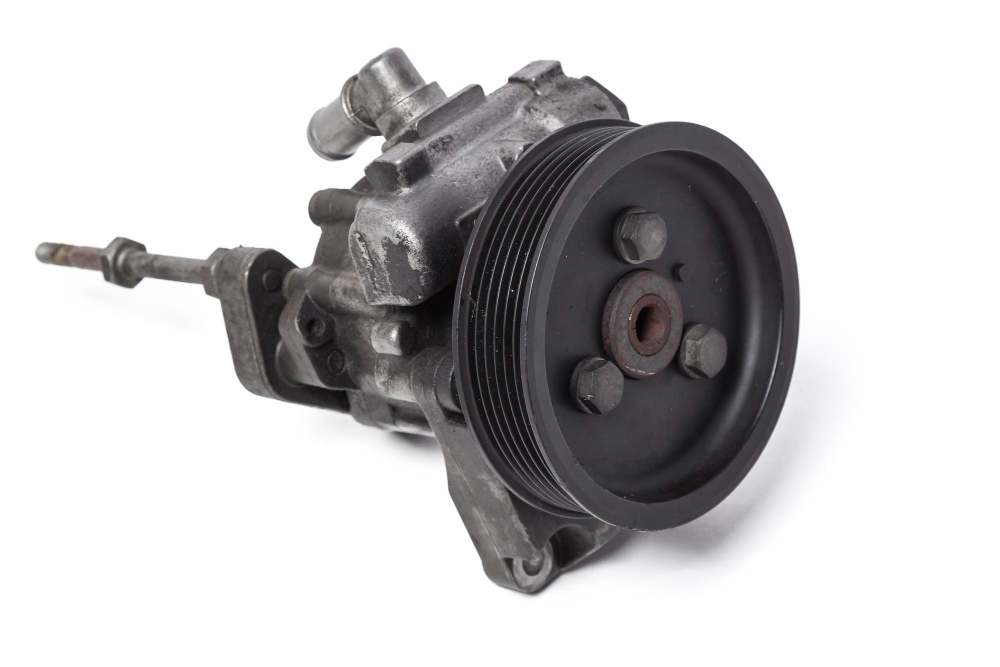
An electric power steering pump is a motor-driven unit that provides hydraulic pressure to assist your steering effort. It replaces the traditional engine-driven hydraulic pump with an electric motor, allowing the system to operate independently of engine speed and only when steering assistance is actually needed.
There are actually two distinct categories that fall under the EPS umbrella:
- Fully electric power steering (EPS): Uses an electric motor mounted directly on the steering column or rack to provide assist. There is no hydraulic fluid involved at all.
- Electro-hydraulic power steering (EHPS): Uses an electric motor to drive a hydraulic pump, which then provides pressurized fluid to a conventional steering rack. This is a hybrid approach.
When most people refer to an “electric power steering pump,” they are usually talking about the EHPS type, since a fully electric system does not technically have a pump. Both systems accomplish the same goal: reducing the physical effort needed to turn the steering wheel.
How Does Electric Power Steering Work?
The basic principle behind EPS is straightforward. Sensors detect how much you are turning the steering wheel and how fast you are turning it, and a computer tells an electric motor exactly how much assistance to provide.
The EPS Control Loop
Here is the step-by-step process that happens every time you turn the wheel:
- Torque sensor detects input. A sensor on the steering column measures how much rotational force you are applying to the wheel.
- Speed sensor provides context. The vehicle speed sensor tells the EPS control module how fast the car is moving.
- ECU calculates assist level. The electronic control unit processes both inputs and determines the correct amount of steering assist.
- Electric motor delivers assist. The motor applies the calculated force to either the steering column, the pinion gear, or the steering rack directly.
- Continuous adjustment. This loop repeats many times per second, constantly adjusting assist levels in real time.
At low speeds, such as parking, the system provides maximum assist so you can turn the wheel easily. At highway speeds, it reduces assist to give the steering a firmer, more stable feel.
Three Types of EPS Motor Placement
The location of the electric motor affects steering feel and performance:
- Column-assist EPS (C-EPS): The motor sits on the steering column inside the cabin. This is the most common and least expensive configuration, found on compact and midsize cars.
- Pinion-assist EPS (P-EPS): The motor attaches directly to the steering pinion gear. This provides more direct feedback and is used on sportier vehicles.
- Rack-assist EPS (R-EPS): The motor connects to the steering rack itself. This configuration handles heavier vehicles and provides the most assist force. You will find it on trucks and SUVs.
Key Components of an Electric Power Steering System
Understanding the individual parts helps with diagnosis when something goes wrong.
Torque Sensor
This is arguably the most critical component. Mounted on the steering column, the torque sensor measures exactly how much force you are applying to the steering wheel. It typically uses a torsion bar that twists slightly under load, with magnetic or optical sensors reading the degree of twist. If this sensor fails, the system cannot determine how much assist to provide.
Electric Motor
The motor is usually a brushless DC unit chosen for its reliability and precise control. It provides the physical force that makes steering easier. Motor size varies by application, with heavier vehicles requiring larger, more powerful motors.
Electronic Control Unit (ECU)
The EPS control module is the brain of the system. It receives inputs from the torque sensor, vehicle speed sensor, and sometimes the engine control module, then calculates the exact current to send to the motor. Modern EPS controllers can also adjust steering feel based on driving mode selections like comfort, normal, and sport.
Wiring Harness and Connectors
Because EPS is an electrical system, it relies on wiring harnesses to connect the motor, sensors, and ECU. Corroded connectors or damaged wiring are common failure points, especially in older vehicles or those exposed to harsh conditions.
Steering Rack or Column Assembly
The mechanical components of the steering system remain largely the same. The rack-and-pinion or recirculating ball mechanism still does the actual work of turning the wheels. EPS simply adds an electric motor to assist that mechanism.
Advantages of Electric Power Steering
Automakers did not switch to EPS just for the sake of change. The benefits are significant and measurable.
Improved Fuel Efficiency
A traditional hydraulic power steering pump runs constantly, drawing power from the engine through a belt even when you are driving straight and do not need any steering assist. An electric system only draws power when you actually turn the wheel. This difference saves between 2 and 4 percent in fuel consumption, which adds up over the life of a vehicle.
Reduced Maintenance
Hydraulic systems require power steering fluid that needs to be checked, topped off, and eventually flushed. Hoses can leak, pumps can wear out, and belts can break. Electric systems eliminate fluid, hoses, belts, pulleys, and the engine-driven pump entirely. That is a lot of potential failure points removed from the equation.
Variable Assist and Driving Modes
EPS makes it simple for manufacturers to offer adjustable steering feel through software. Want lighter steering for city driving and heavier steering on the highway? The computer handles that automatically. Many vehicles also let you select comfort, normal, or sport steering modes, all through the same physical hardware with different software calibrations.
Enables Advanced Driver Assistance
Lane-keeping assist, automatic parking, and other advanced driver-assistance systems (ADAS) all require the ability to steer the car without driver input. Electric power steering makes this possible because the computer can command the motor directly. Hydraulic systems cannot do this without adding expensive electro-hydraulic valves.
Packaging and Weight
Removing the hydraulic pump, reservoir, hoses, and belt-drive system frees up space in the engine bay and reduces overall vehicle weight. For automakers trying to meet emissions and efficiency targets, every pound counts.
Which Vehicles Use Electric Power Steering?
As of 2026, the vast majority of new passenger vehicles sold worldwide use some form of electric power steering. The transition began in the early 2000s and accelerated through the 2010s.
Common Vehicles with EPS
- Honda Civic: Switched to EPS starting with the 2006 model year
- Toyota Camry: EPS standard since 2012
- Ford F-150: Adopted EPS with the 2011 model redesign
- Chevrolet Silverado: EPS across the lineup since 2019
- Jeep Wrangler: Moved to EPS with the JL generation in 2018
- BMW 3 Series: EPS standard since 2012
- Hyundai and Kia models: Nearly all use EPS since the mid-2010s
Vehicles That Still Use Hydraulic or EHPS
Some heavy-duty trucks and certain performance vehicles have been slower to adopt full EPS. You may still find hydraulic or electro-hydraulic systems on:
- Heavy-duty pickup trucks (2500/3500 class)
- Some commercial vehicles
- Certain older performance cars where drivers prefer traditional hydraulic steering feel
Common Questions About Electric Power Steering Pumps
Can you add power steering fluid to an EPS system?
If your vehicle has a fully electric system, there is no fluid to add. If it has an electro-hydraulic system (EHPS), then yes, it does use power steering fluid and the reservoir should be checked periodically.
How long do EPS motors last?
Most electric power steering motors are designed to last the life of the vehicle. Failures do occur, but they are less common than hydraulic pump failures. When they do fail, the cause is often electrical rather than mechanical.
Is EPS steering feel as good as hydraulic?
Early EPS systems were criticized for numb, disconnected steering feel. Modern systems have improved dramatically, and many enthusiasts now find that well-tuned EPS provides excellent feedback. Rack-assist configurations in particular offer steering feel that rivals traditional hydraulic setups.
What happens if the EPS system fails while driving?
You will still be able to steer the vehicle, but it will require significantly more effort. The mechanical connection between the steering wheel and the wheels is always maintained. The EPS motor simply makes it easier. A warning light will illuminate on the dashboard if the system detects a fault.
Keeping Your Electric Power Steering System Healthy
While EPS requires less maintenance than hydraulic systems, there are still a few things you can do:
- Pay attention to warning lights. The EPS or power steering warning light means the system needs attention. Do not ignore it.
- Check for software updates. Some EPS issues are resolved through software recalibration at the dealer.
- Inspect wiring and connectors. Especially in older vehicles, corrosion on electrical connections can cause intermittent EPS faults.
- Avoid aftermarket electrical modifications that could interfere with the EPS system’s power supply.
Frequently Asked Questions
EPS (electric power steering) uses only an electric motor on the column or rack with no hydraulic fluid at all. EHPS (electro-hydraulic power steering) uses an electric motor to drive a hydraulic pump, maintaining fluid and hoses but eliminating the engine-driven belt. EHPS preserves traditional hydraulic steering feel while improving efficiency over a belt-driven pump.
If your vehicle has no power steering fluid reservoir under the hood, it has a fully electric EPS system. You can also check your owner’s manual or look up your year, make, and model. Most vehicles from 2015 onward in the compact and midsize segments use EPS.
You can drive with the EPS warning light on, but steering will require more physical effort, especially at low speeds. The mechanical connection remains intact. Have the system diagnosed as soon as possible, since the fault can worsen and create a safety concern during emergency steering maneuvers.
Fully electric EPS systems require no fluid — there is nothing to check or top off. EHPS systems do use a hydraulic fluid reservoir, which should be inspected periodically. Check your owner’s manual to determine which system your vehicle has.
Grinding or humming from an EPS system typically indicates motor bearing wear, a loose mounting, or mechanical wear inside the steering column or rack. For EHPS systems, low fluid or a failing pump motor can cause similar noises. Have the system inspected promptly since noise usually worsens before failure.
An EPS motor or EHPS pump replacement typically costs $550–$1,700 in total including parts and labor, depending on the vehicle. EHPS pumps are on the lower end of that range, while column or rack-mounted EPS motors with programming requirements can reach the higher end.
Yes. EPS systems draw significant electrical current, especially during slow-speed parking maneuvers. A weak battery or failing alternator may not supply enough voltage, causing the EPS to perform inconsistently, throw warning codes, or shut off temporarily. Always check the battery and charging system when diagnosing EPS issues.
Trust R & Y A/C Compressors for Quality EPS Pumps
At R & Y A/C Compressors, we have been supplying quality auto parts from Miami since 1989. Our catalog includes electric power steering pumps for a wide range of popular vehicles. Whether you are a DIY mechanic tackling a weekend project or a shop looking for reliable replacement parts, we have you covered with tested, dependable EPS pumps backed by our warranty. Browse our selection at rycompressors.com or give us a call to find the right part for your vehicle.