
*By the AC Specialists at R & Y A/C Compressors | Family-owned and operated in Miami, FL since 1989 | Last updated: March 2026*
Quick Answer:
AC compressor bearing noise — grinding, squealing, or chirping from the compressor area — most often comes from the clutch pulley bearing, which spins whenever the engine runs. Use the AC on/off test and belt removal test to confirm. Depending on severity, you can replace just the bearing, the entire clutch assembly, or the full compressor.
A new noise from under the hood is never welcome, and when it seems connected to your air conditioning, the AC compressor bearing is often the culprit. The bearing in the compressor clutch pulley spins every time your engine runs, whether the AC is on or off. That constant use means it will eventually wear out, and when it does, it lets you know with noise.
This guide will help you identify AC compressor bearing noise, understand the different bearings involved, and decide whether to replace just the bearing, the clutch assembly, or the entire compressor.
Understanding the Bearings in Your AC System
Your AC compressor actually has two key bearings, and it is important to know which one is causing the problem because the repair approach is different for each.
The Clutch Pulley Bearing
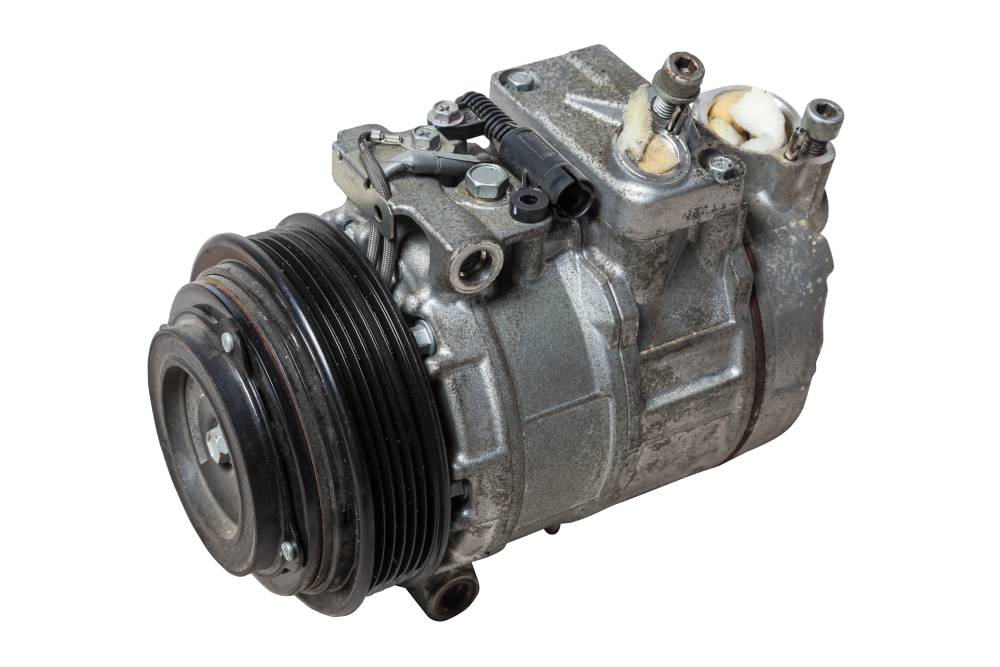
This is the most common source of AC-related bearing noise. The clutch pulley bearing is a sealed ball bearing pressed into the outer pulley of the AC compressor clutch. It allows the pulley to spin freely on the compressor’s nose whenever the engine is running.
Key points about the clutch pulley bearing:
- It spins any time the engine is on, regardless of whether the AC is activated.
- It is exposed to engine bay heat, moisture, and road grime.
- It is a sealed bearing, meaning it has a limited supply of grease that eventually breaks down.
- On most vehicles, it can be replaced without removing the compressor from the vehicle.
The Compressor Internal Bearing
The compressor also has internal bearings that support the main shaft. These bearings are lubricated by the compressor oil that circulates with the refrigerant. Internal bearing failure is less common than clutch bearing failure, but when it happens, the compressor typically needs to be replaced entirely.
How to Identify AC Compressor Bearing Noise
What Does a Bad AC Compressor Bearing Sound Like?
The type of noise depends on the severity of the bearing wear:
Early stage — chirping or light squealing. A bearing that is beginning to lose lubrication may produce a light, intermittent chirp or squeal. This often happens when the engine is cold and may go away as things warm up.
Mid stage — constant grinding or growling. As the bearing deteriorates further, the noise becomes a steady grinding or growling sound. This noise will be present any time the engine is running if the clutch pulley bearing is the issue.
Late stage — loud screeching or metal-on-metal. A severely worn bearing produces a harsh, unmistakable screeching sound. At this point, the bearing is close to complete failure and should be addressed immediately to prevent further damage.
The AC On/Off Test
This is the simplest way to narrow down which bearing is causing the noise.
Noise present with AC off, changes or goes away with AC on: This strongly suggests the clutch pulley bearing. The pulley bearing spins freely when the AC is off. When you turn the AC on, the clutch engages and locks the pulley to the compressor shaft, changing the loading on the bearing and altering the noise.
Noise appears or gets louder only when AC is on: This could indicate an internal compressor bearing or a clutch plate issue. When the AC is on, the compressor is under load, and internal bearing problems become audible.
Noise present all the time, regardless of AC status: Could be either bearing, but the clutch pulley bearing is more likely since it spins continuously.
The Belt Removal Test
For a more definitive diagnosis, you can temporarily remove the serpentine belt and spin the AC compressor pulley by hand.
- Rough, gritty, or crunchy feel when spinning the pulley indicates a bad clutch pulley bearing.
- Smooth, free-spinning pulley suggests the pulley bearing is fine, and the noise may be coming from inside the compressor or from another belt-driven component entirely.
- Pulley wobbles or has excessive play indicates severe bearing wear.
This test takes just a few minutes and can save you from misdiagnosing the problem.
Do Not Confuse It with Other Noises
Several other components can produce similar noises:
- Idler pulley bearing: The serpentine belt system has one or more idler pulleys with their own bearings. A bad idler bearing sounds very similar to a bad compressor clutch bearing.
- Belt tensioner bearing: The automatic belt tensioner has a bearing that can also wear and make noise.
- Alternator bearing: Another common source of belt-area noise.
- Water pump bearing: On some vehicles, the water pump is belt-driven and can produce bearing noise.
The belt removal test, combined with individually spinning each pulley, will help you isolate the exact source.
Your Repair Options
Once you have confirmed the AC compressor bearing is the problem, you have three main options.
Option 1: Replace Just the Bearing
If the clutch pulley bearing is the only issue, it can be pressed out of the pulley and replaced with a new one.
Pros:
- Lowest cost option (bearing is typically $15 to $40).
- Pulley does not need to come off the vehicle on some designs.
Cons:
- Requires a bearing press or puller, which not everyone has.
- If the bearing race is damaged in the pulley bore, the new bearing may not seat properly.
- Does not address any wear on the clutch plate or coil.
- If the compressor is aging, you may be investing effort into a component that will need replacement soon anyway.
Option 2: Replace the Clutch Assembly
A more comprehensive approach is to replace the entire clutch assembly — the pulley with bearing, the clutch plate, and the electromagnetic coil.
Pros:
- Addresses all the wear items in the clutch area at once.
- New pulley ensures the bearing seats properly.
- New clutch plate and coil reduce the chance of a follow-up failure.
- Typically does not require compressor removal.
Cons:
- More expensive than a bearing alone ($50 to $200 for the clutch kit).
- Does not address internal compressor issues if they exist.
Option 3: Replace the Entire Compressor
If the compressor has significant mileage, is producing internal noise, or if the cost difference is small, replacing the entire compressor makes the most sense.
Pros:
- Addresses the bearing and all other potential compressor issues at once.
- Comes with a new clutch assembly (bearing, plate, coil) already installed.
- Typically includes a warranty.
- Peace of mind knowing the entire unit is fresh.
Cons:
- Highest cost option ($200 to $600 for the compressor, plus labor).
- Requires refrigerant recovery and recharge.
- More labor-intensive than a clutch-only repair.
Which Option Should You Choose?
Here is a practical decision framework:
- Vehicle with low mileage, compressor runs quietly and smoothly otherwise: Bearing or clutch assembly replacement is reasonable.
- Vehicle with moderate to high mileage, compressor showing any signs of age: Full compressor replacement is the better long-term investment.
- Compressor making noise with AC on (internal bearing): Full compressor replacement is the only real option.
- Budget is extremely tight: Bearing-only replacement buys you time, but plan for a more complete repair down the road.
What Happens If You Ignore a Bad Bearing?
Driving with a worn AC compressor bearing is not immediately dangerous, but it should not be ignored for long. Here is what can happen:
- Complete bearing seizure. If the bearing locks up, the pulley stops spinning. Since the serpentine belt wraps around this pulley, a seized bearing can shred the belt, leaving you without the alternator, power steering, and water pump as well.
- Belt damage. Even before full seizure, a rough bearing can wear the belt unevenly, causing it to fray, crack, or slip.
- Clutch damage. Excessive bearing play can cause the clutch plate to contact the pulley unevenly, wearing the friction surfaces and potentially damaging the electromagnetic coil.
- Compressor damage. In severe cases, a disintegrating pulley bearing can throw debris into the clutch mechanism or cause shaft misalignment, damaging the compressor.
The safest approach is to address bearing noise as soon as you identify it. A $30 bearing replacement now can prevent a $500+ compressor replacement later.
Replacement Tips
- Match the bearing exactly. AC compressor clutch bearings are specific to the compressor model. The inner diameter, outer diameter, and width must match precisely. Use the compressor model number to look up the correct bearing.
- Inspect the clutch plate air gap after replacing the bearing or clutch assembly. The gap should typically be 0.015 to 0.040 inches (consult your vehicle specifications).
- Check the belt condition while you have access. If the belt shows cracks, fraying, or glazing, replace it.
- Consider replacing the belt tensioner and idler pulleys if they are original and the vehicle has significant mileage. They wear at a similar rate.
Frequently Asked Questions
Use the belt removal test. Remove the serpentine belt and spin each pulley by hand individually. The one that feels rough, gritty, or wobbles is the culprit. Also use the AC on/off test — noise that changes when you toggle the AC is more likely to be the compressor clutch bearing.
You can drive for a short period, but it is risky. If the clutch pulley bearing seizes, it will lock up the pulley, potentially shredding the serpentine belt and leaving you without power steering, alternator, and water pump. Address bearing noise as soon as possible.
Most clutch pulley bearings last 80,000 to 150,000 miles under normal conditions. Heat, humidity, infrequent AC use, and contamination from leaking seals shorten their lifespan. Vehicles in hot, humid climates like Florida tend to see earlier bearing wear.
It typically starts as a faint chirp or squeal, progresses to a constant grinding or growling, and in severe cases becomes a loud screech or metal-on-metal sound. The noise is usually present whenever the engine runs, since the clutch pulley bearing spins continuously.
If the vehicle has low mileage and the compressor is in good condition, a bearing replacement makes sense. For higher-mileage vehicles, replacing the complete clutch assembly (pulley, plate, and coil) is better value since the other clutch components are similarly aged. If the compressor itself makes noise, replace the entire compressor.
The bearing itself does not affect cooling. However, if the bearing fails catastrophically and seizes the pulley, the serpentine belt can be damaged or destroyed, which would also disable the compressor along with other engine accessories.
Stop the Noise and Protect Your Compressor
AC compressor bearing noise is your warning signal. Catch it early, and the fix is simple and affordable. Let it go too long, and you could be looking at a much bigger repair bill.
At R & Y A/C Compressors, we supply clutch assemblies, individual clutch components, and complete compressors for a wide range of vehicles. We have been the go-to source for auto AC parts since 1989, and our team in Miami is ready to help you identify the right part for your vehicle. Enter your year, make, and model at rycompressors.com or call us to get your AC running quietly again.