
*By the AC Specialists at R & Y A/C Compressors | Family-owned and operated in Miami, FL since 1989 | Last updated: March 2026*
Quick Answer
Toyota Camry AC compressor problems range from clutch relay failures and internal wear on the 7th gen (2012–2017) to blend door actuator misdiagnoses and refrigerant transition issues on the 8th gen (2018–2024). Full replacement at an independent shop costs $610–$1,255 with a remanufactured compressor. Always replace the receiver/drier and expansion valve simultaneously, and never skip system evacuation.
The Toyota Camry has been America’s best-selling sedan for decades, and its reputation for reliability is well earned. But reliability does not mean immunity to wear. The AC compressor is a mechanical component that works hard, especially in hot climates, and it will eventually need attention or replacement.
This guide covers the most common AC compressor issues across Camry generations, how to diagnose problems accurately, and what a replacement costs in 2026.
Common Toyota Camry AC Problems by Generation
7th Generation (2012-2017)
The 7th-gen Camry is one of the most common vehicles on the road today, and AC compressor issues become more frequent as these cars accumulate mileage.
- Compressor clutch failure: The clutch relay or clutch coil wears out, preventing the compressor from engaging. The AC blows only warm air, and you will not hear the usual click when turning the AC on.
- Internal compressor wear: After 100,000 to 150,000 miles, internal reed valves and piston rings can wear, reducing the compressor’s ability to pressurize refrigerant. Vent temperatures gradually increase over time rather than failing suddenly.
- Condenser micro-leaks: The aluminum condenser develops pinhole leaks from road salt and debris exposure. Refrigerant slowly escapes, and the system eventually loses enough charge that the compressor will not engage due to the low-pressure safety switch.
- Evaporator drain clog: A clogged evaporator drain tube causes water to back up inside the case, sometimes freezing on the evaporator and blocking airflow. This is not a compressor issue, but it mimics one because the air feels warmer.
8th Generation (2018-2024)
The 8th-gen Camry brought the TNGA platform and improved overall quality, but AC issues still occur:
- Refrigerant transition considerations: Some 2018-2020 models use R-134a, while later models transitioned to R-1234yf. Make sure you know which refrigerant your Camry uses before any service.
- Compressor noise at startup: Some owners report a brief grinding or clunking noise from the compressor when the AC first engages after the car has been sitting. This is often caused by refrigerant migration during the off period and is usually harmless if the noise goes away within seconds.
- Blend door actuator failures: A malfunctioning blend door actuator can mix hot air with cold, making it seem like the AC is not working. This is a common misdiagnosis that leads to unnecessary compressor replacement.
- Electrical connector corrosion: The compressor clutch connector, located low on the engine, is exposed to road spray and can corrode, especially in northern states where roads are salted.
Camry Hybrid Considerations
Camry Hybrids use an electric AC compressor that operates independently of the gasoline engine. This allows the AC to function when the engine is off during electric-only driving. These electric compressors have different failure modes:
- Inverter failure: The high-voltage inverter that drives the electric compressor can fail, disabling the AC entirely.
- High-voltage wiring issues: Damaged or corroded high-voltage connections can reduce compressor performance.
- Compressor motor burnout: Though rare, the internal electric motor can fail, requiring full compressor replacement.
Important safety note: Camry Hybrid AC compressors operate on high voltage. Do not attempt to service the AC compressor on a hybrid vehicle unless you are trained in high-voltage safety procedures.
Step-by-Step Diagnosis for Camry AC Problems
Before spending money on a compressor, verify that the compressor is actually the problem. Many AC complaints have simpler, less expensive causes.
Step 1: Verify the Complaint
Turn the AC to maximum cold with the blower on high. Use a thermometer in the center vent to measure outlet temperature. On a properly functioning system with an ambient temperature of 80 to 90 degrees Fahrenheit, you should see vent temperatures between 38 and 48 degrees. Anything above 55 degrees indicates a problem.
Step 2: Check the Compressor Clutch
With the engine running and AC on:
- Listen for the clutch engagement click
- Look at the compressor to see if the center hub is spinning (it should be)
- If the clutch is not engaging, check the AC fuse (usually in the underhood fuse box), the AC relay, and the clutch connector voltage
Step 3: Measure System Pressures
Connect a manifold gauge set to the high and low service ports. Normal operating pressures for a Camry running R-134a at approximately 85 degrees ambient:
- Low side: 28 to 38 psi
- High side: 200 to 260 psi
Abnormal readings tell you specific things:
| Low Side | High Side | Likely Cause |
| Low (below 20 psi) | Low | Low refrigerant charge (leak) |
| High (above 45 psi) | High | Condenser airflow restriction, overcharge, or cooling fan not working |
| High | Low | Compressor not compressing (internal failure) |
| Normal | Normal | Problem is not refrigerant related (check blend door, blower, cabin filter) |
| Vacuum or very low | Normal or high | Expansion valve stuck closed or blockage in liquid line |
Step 4: Leak Test
If the charge is low, find the leak before adding refrigerant. Common Toyota Camry leak points:
- Compressor shaft seal
- Condenser (especially the lower third where road debris hits)
- Hose connections and O-ring seals
- Schrader valve cores at the service ports
- Evaporator (harder to detect, requires removing the glove box and checking with a sniffer)
Use UV dye and a blacklight, or an electronic refrigerant detector, to locate leaks.
Step 5: Evaluate Compressor Function
If the compressor engages and pressures are normal but vent temperatures are still high, the issue is likely downstream of the compressor. Check:
- Blend door actuator operation (you should hear it move when changing temperature settings)
- Cabin air filter condition
- Cooling fan operation at the condenser
- Evaporator drain tube for blockage
Toyota Camry AC Compressor Replacement
Parts You Will Need
For a complete and reliable repair, plan on replacing more than just the compressor:
- AC compressor: Matched to your Camry’s year, engine, and refrigerant type
- Receiver/drier: This component removes moisture from the system and should be replaced every time the system is opened
- Expansion valve: Replace this if the compressor failed internally, or if it is a high-mileage vehicle where the original is likely worn
- Compressor oil (PAG oil): The correct viscosity and quantity for your system
- Refrigerant: R-134a or R-1234yf, charged to the amount specified on your underhood label
- O-ring kit: Fresh O-rings for every fitting you disconnect
- Condenser: Strongly recommended if the old compressor had an internal failure. Metal debris from the failed compressor gets trapped in the condenser’s tiny passages and is nearly impossible to flush completely.
Replacement Procedure Overview
- Recover all refrigerant from the system using certified equipment
- Disconnect the battery (for safety, especially on hybrid models)
- Remove the serpentine belt or AC belt
- Disconnect the suction and discharge hoses from the compressor
- Disconnect the electrical connector from the clutch coil
- Remove the compressor mounting bolts (typically 3 or 4 bolts)
- Remove the old compressor
- Transfer the correct amount of fresh PAG oil to the new compressor (drain excess if the new unit comes pre-oiled)
- Install the new compressor with new O-rings on all connections
- Replace the receiver/drier and expansion valve
- Reconnect all hoses and the electrical connector
- Reinstall the drive belt
- Evacuate the system to at least 500 microns for a minimum of 30 minutes
- Charge with the correct weight of refrigerant
- Verify operation and check for leaks
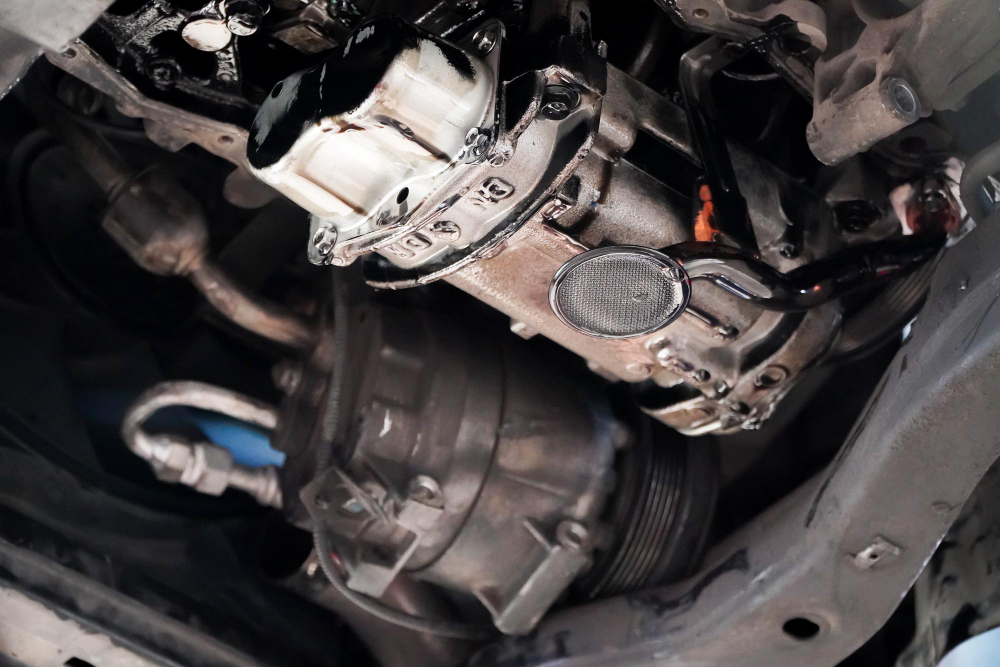
Compressor Access on the Camry
On four-cylinder Camry models, the compressor is located on the lower front of the engine and is relatively accessible. On V6 models, access is tighter and may require removing additional components. The job typically takes an experienced technician 3 to 4 hours for a four-cylinder and 4 to 5 hours for a V6.
Toyota Camry AC Compressor Replacement Cost
At an Independent Shop
| Item | Cost Range |
| Remanufactured compressor | $200 – $400 |
| New OEM compressor | $400 – $700 |
| Receiver/drier | $25 – $70 |
| Expansion valve | $30 – $65 |
| Refrigerant and oil | $40 – $90 |
| O-rings and hardware | $15 – $30 |
| Labor (3-5 hours) | $300 – $600 |
| Total (with reman compressor) | $610 – $1,255 |
| Total (with new OEM compressor) | $810 – $1,555 |
At a Toyota Dealership
Dealership pricing typically runs 30 to 50 percent higher than an independent shop, primarily due to higher labor rates and OEM-only parts pricing. Expect $1,100 to $1,800 for a complete compressor replacement at a dealer.
DIY Cost
Parts alone for a complete DIY replacement (compressor, drier, expansion valve, refrigerant, oil, O-rings) range from $300 to $600. You will need access to AC service equipment including a recovery machine, vacuum pump, manifold gauges, and a refrigerant scale.
Preventing Camry AC Compressor Problems
While you cannot prevent all compressor failures, you can extend the life of your AC system:
- Run the AC regularly, even in winter. This keeps the compressor seals lubricated and prevents them from drying out and leaking.
- Replace the cabin air filter on schedule. A clogged filter restricts airflow across the evaporator, forcing the system to work harder.
- Address small refrigerant leaks promptly. Running a low system strains the compressor and reduces the lubrication provided by the oil suspended in the refrigerant.
- Keep the condenser clean. Debris buildup on the condenser reduces its ability to reject heat, raising system pressures and compressor workload.
- Listen for changes. New noises from the compressor area often indicate developing problems that are cheaper to fix if caught early.
Frequently Asked Questions
At an independent shop with a remanufactured compressor, expect $610–$1,255 total. With a new OEM compressor, the total rises to $810–$1,555. Toyota dealerships typically charge 30–50% more. DIY parts cost $300–$600 if you have AC service equipment.
The most common causes on the Camry are low refrigerant charge (from a condenser micro-leak or shaft seal leak), a failed compressor clutch relay, a malfunctioning blend door actuator (which routes warm air to the vents even when AC is running), or a clogged evaporator drain. Proper pressure testing and clutch inspection will identify the cause.
The 7th gen (2012–2017) Camry develops clutch relay and internal compressor wear issues around 100,000–150,000 miles, which is common for vehicles of that age and mileage. The 8th gen (2018–2024) is generally more reliable but has documented cases of blend door actuator failures misdiagnosed as compressor problems.
With regular AC use and proper maintenance, a Camry compressor typically lasts 150,000 miles or more. Factors that shorten compressor life include infrequent use (seals dry out), running with a low refrigerant charge (reduces lubrication), and operating with a dirty condenser (raises system pressures and heat stress on the compressor).
Yes, always replace the receiver/drier when opening the AC system for compressor replacement. The drier contains desiccant that absorbs moisture, and once it is saturated or exposed to atmosphere during the repair, it cannot protect the system. A new drier is inexpensive insurance against moisture-related damage to the new compressor.
Yes, you can drive without using the AC. If the compressor is making noise only when the AC is engaged, you can disable it and drive normally. However, if the compressor clutch bearing is failing (noise present even with AC off), the bearing could seize and damage the serpentine belt, which would disable the alternator, power steering (on applicable models), and water pump. In that case, the bearing or compressor should be replaced promptly.
Most 2012–2020 Camry models use R-134a. Later 2020–2024 production and current models use R-1234yf. Check your underhood label near the AC service ports for the definitive answer. The service port fittings are different sizes for the two refrigerants, so cross-contamination is prevented by design.
Find Your Camry AC Compressor at R & Y A/C Compressors
R & Y A/C Compressors carries AC compressors for every generation of the Toyota Camry, including both four-cylinder and V6 applications. Family-owned and operated out of Miami since 1989, we offer remanufactured and new compressors that are tested to meet OE performance standards and backed by our warranty. Browse our catalog at rycompressors.com or give us a call for personalized help finding the right compressor and components for your Camry.