
*By the AC Specialists at R & Y A/C Compressors | Family-owned and operated in Miami, FL since 1989 | Last updated: March 2026*
Quick Answer:
The AC compressor speed sensor monitors shaft RPM and sends that data to the ECM to protect the compressor from over-speed and seizure. When it fails, the most common symptoms are the AC shutting off unexpectedly, the compressor not engaging at all, or AC-related fault codes. Replacement is typically straightforward and costs $20–$80 for the part.
Among the many components in your car’s AC system, the compressor speed sensor is one of the least talked about. It is small, inexpensive, and easy to overlook. But it serves a vital protective role: preventing your AC compressor from destroying itself.
This guide explains what the speed sensor does, how it protects the compressor, what happens when it fails, and how to handle replacement.
What Is the AC Compressor Speed Sensor?
The AC compressor speed sensor is an electronic sensor that monitors the rotational speed (RPM) of the AC compressor shaft. It sends this information to the vehicle’s engine control module (ECM) or body control module (BCM), which uses the data to manage compressor operation and protect it from damage.
Not all vehicles have a dedicated compressor speed sensor. The component is most commonly found on vehicles with variable displacement compressors, clutchless compressor designs, or more advanced climate control systems that require precise control over compressor output.
Where It Is Located
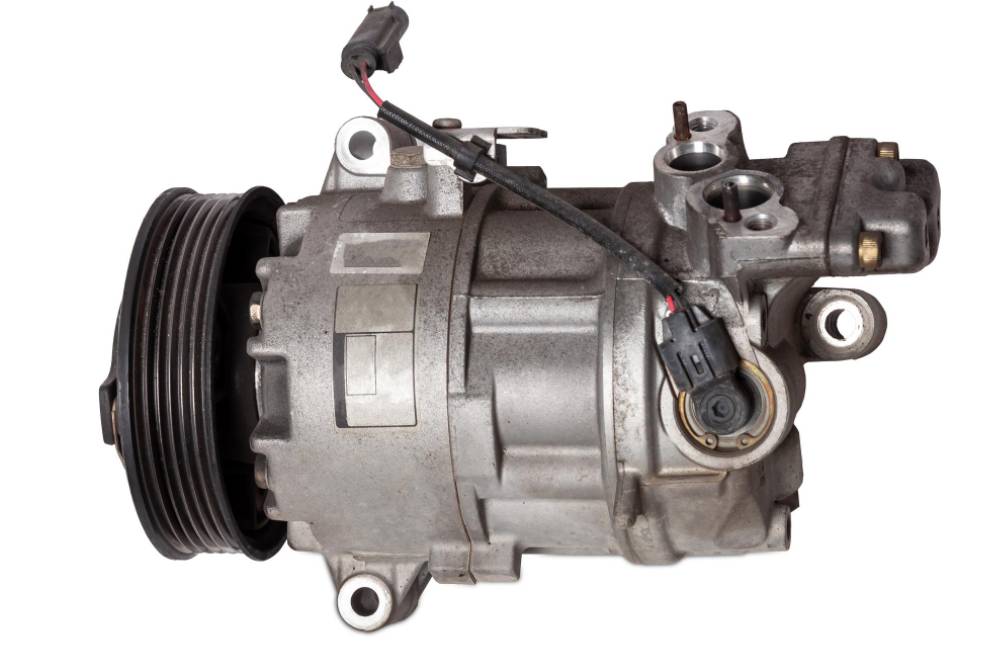
The speed sensor is typically mounted on the exterior of the compressor housing, near the clutch or the compressor shaft. It threads or clips into a port on the compressor body where it can detect the rotation of the shaft or an internal toothed ring.
The sensor itself is small — usually about the size of a spark plug or slightly larger — with an electrical connector leading to the vehicle’s wiring harness.
How the Speed Sensor Works
Most AC compressor speed sensors are Hall effect sensors or magnetic pickup sensors. They work by detecting the passage of metallic teeth, notches, or magnets on a rotating component inside or on the compressor.
As the compressor shaft spins, the sensor generates an electrical signal — typically a series of pulses — whose frequency corresponds to the shaft speed. The faster the compressor turns, the higher the frequency of the pulses.
The control module reads this frequency and converts it to an RPM value. It then uses this information in several important ways.
Compressor Protection
The primary purpose of the speed sensor is to protect the compressor from two dangerous conditions:
Over-speed protection. If the compressor is spinning too fast — which can happen during high-RPM driving or if the control system malfunctions — the control module can reduce compressor displacement (on variable displacement units) or disengage the clutch to prevent mechanical damage. Excessive speed can cause bearing failure, internal wear, and catastrophic compressor breakdown.
Under-speed and lockup detection. If the compressor shaft slows down unexpectedly or stops while the clutch is still engaged, it means something is mechanically wrong. The compressor may be seizing or experiencing excessive internal friction. The control module uses the speed sensor data to detect this condition and immediately disengage the compressor clutch, preventing belt damage, pulley damage, and further compressor destruction.
System Efficiency Optimization
Beyond protection, the speed sensor data helps the climate control system optimize performance:
- Matching compressor output to demand. By knowing the exact compressor speed, the control module can more precisely calculate refrigerant flow rate and adjust the control valve (on variable displacement compressors) for optimal efficiency.
- Idle speed compensation. When the AC compressor loads the engine at idle, the ECM may need to increase idle speed slightly. The speed sensor provides real-time data to help the ECM make these adjustments smoothly.
- Diagnostic monitoring. The speed sensor data is used for OBD-II diagnostic purposes. If the compressor speed is out of the expected range for the current operating conditions, the system can set a diagnostic trouble code (DTC) to alert the driver or technician.
Symptoms of a Failing Speed Sensor
AC System Shuts Off Unexpectedly
This is one of the most common symptoms. If the speed sensor fails or sends incorrect data, the control module may interpret this as a compressor malfunction and shut down the AC system as a protective measure. The AC may work intermittently — running for a while, shutting off, and then working again after the vehicle is restarted.
AC Compressor Does Not Engage
If the control module does not receive a valid speed signal, it may refuse to engage the compressor clutch at all. From the driver’s perspective, the AC simply does not turn on. The blower works, but only warm air comes out.
This symptom can be frustrating to diagnose because it mimics low refrigerant, a bad clutch coil, or a faulty pressure switch. However, if all other components check out and the system has proper refrigerant charge, the speed sensor should be investigated.
Check Engine Light or AC-Related Diagnostic Codes
A failed speed sensor will often trigger a diagnostic trouble code. Common codes related to the compressor speed sensor include:
- Codes referencing AC compressor RPM out of range.
- Codes indicating AC compressor circuit malfunction.
- Codes for AC compressor clutch circuit or performance issues.
The specific code depends on the vehicle manufacturer and model. A scan tool that can read manufacturer-specific codes (not just generic OBD-II codes) is often needed to get the full picture.
Poor AC Performance at Certain RPMs
A speed sensor that sends intermittent or inaccurate data can cause the control module to miscalculate the compressor output needed. This may result in the AC cooling well at some engine speeds but poorly at others, particularly if the system adjusts compressor displacement based on the faulty speed data.
Compressor Runs at Full Displacement Constantly
On some systems, if the speed sensor fails, the control module defaults to running the compressor at minimum displacement as a safety measure. On others, depending on the failure mode, it may default to maximum displacement. If the compressor runs at full output regardless of conditions, the evaporator may freeze up, cycling between cold air and no air as ice builds and melts on the evaporator.
Diagnosing a Speed Sensor Problem
Step 1: Scan for Diagnostic Trouble Codes
Start with a code scan. If the speed sensor has failed, there will often be a stored code pointing directly to it. Use a scan tool capable of reading manufacturer-specific AC and body control codes, not just generic powertrain codes.
Step 2: Check the Electrical Connection
Inspect the sensor connector for corrosion, damaged pins, or a loose fit. The sensor lives in a harsh environment on the compressor body, exposed to engine heat, vibration, and road spray. Connector issues are a common cause of intermittent speed sensor problems.
Step 3: Measure the Sensor Signal
With the engine running and the AC on, use an oscilloscope or a frequency-reading multimeter at the sensor connector to verify the sensor is producing a pulse signal. Compare the frequency to the expected value for the current engine RPM (accounting for the compressor drive ratio).
If there is no signal, check for power and ground at the connector. If power and ground are present but there is no output signal, the sensor itself has likely failed.
Step 4: Inspect the Sensor and Mounting
Remove the sensor and inspect the tip for damage, contamination, or metallic debris that could interfere with its operation. Also check the mounting bore in the compressor for debris or damage. Clean both the sensor and the bore before reinstalling or replacing.
Replacing the Speed Sensor
The Process
Speed sensor replacement is typically a quick and straightforward job.
- Locate the sensor on the compressor body. It is usually accessible without removing the compressor.
- Disconnect the electrical connector.
- Remove the sensor. Depending on the design, it may be held in place by a bolt, a clip, or threads.
- Install the new sensor. Ensure it is seated properly and the air gap (if adjustable) is within specification.
- Reconnect the electrical connector.
- Clear any diagnostic trouble codes with a scan tool.
- Test the system to verify the AC operates correctly and the sensor signal is within range.
In most cases, refrigerant recovery is not required because the sensor does not penetrate into the refrigerant circuit on many compressor designs. However, on some compressors where the sensor does seal against the refrigerant side, the system will need to be recovered before removing the sensor. Check the service information for your specific compressor.
Cost
- Speed sensor (parts): $20 to $80 for most applications.
- Labor: $50 to $150 if the sensor is externally accessible. Significantly more if the compressor must be removed for access.
- No refrigerant work required in most cases, which keeps the cost down.
Prevention
The speed sensor itself does not require scheduled maintenance, but you can help extend its life by:
- Keeping the electrical connector clean and protected. If you notice corrosion at the connector during other under-hood work, clean it and apply dielectric grease.
- Addressing AC problems promptly. If the compressor is laboring due to low refrigerant, a blocked condenser, or another issue, the abnormal operating conditions put extra stress on all components, including the speed sensor.
- Using quality replacement parts. When the compressor is replaced, make sure the new unit includes a compatible speed sensor port and that the sensor is properly installed.
Frequently Asked Questions
No. Speed sensors are most common on vehicles with variable displacement or clutchless compressors, and on more advanced dual-zone or automatic climate control systems. Many older or simpler AC systems do not have a speed sensor.
Yes. A failed AC compressor speed sensor will typically set a manufacturer-specific diagnostic trouble code that may illuminate the check engine or service engine soon light. You will need a scan tool capable of reading manufacturer-specific codes to retrieve it.
With the engine running and the AC on, use an oscilloscope or frequency-capable multimeter at the sensor connector to check for a pulse signal. Confirm that power and ground are present at the connector. If power and ground are good but there is no output signal, the sensor has failed.
It depends on the failure mode and the vehicle. Some systems will refuse to engage the compressor entirely without a valid speed signal. Others will allow the AC to run but in a degraded or default mode. In some cases, the AC will work intermittently.
On most designs, no. The speed sensor is mounted externally and does not penetrate the refrigerant circuit, so refrigerant recovery is not required. However, on some compressor designs the sensor does seal against the refrigerant side, in which case the system must be recovered first. Check your vehicle’s service information.
The sensor itself is typically $20 to $80. Labor is $50 to $150 if the sensor is externally accessible without removing the compressor. Total cost is usually under $200, making it one of the more affordable AC repairs.
A Small Part with a Big Job
The AC compressor speed sensor may be small and inexpensive, but it serves as the compressor’s early warning system. By monitoring shaft speed in real time, it allows the control module to intervene before a minor issue becomes a catastrophic failure.
At R & Y A/C Compressors, we supply speed sensors and complete compressor assemblies with properly integrated sensor ports for a wide range of vehicles. We have been in the auto AC parts business since 1989, and we understand that every component matters — no matter how small. Enter your year, make, and model at rycompressors.com or reach out to our team in Miami for help finding the right sensor or compressor for your vehicle.