
*By the AC Specialists at R & Y A/C Compressors | Family-owned and operated in Miami, FL since 1989 | Last updated: March 2026*
Quick Answer:
When the AC compressor clutch won’t engage, the most common causes are low refrigerant triggering the low-pressure safety switch, a blown fuse, a failed relay, or a bad clutch coil. Start by checking the fuse and refrigerant pressure — these two checks alone resolve most cases. A systematic electrical test from fuse to coil will find any remaining issues.
You turn on the AC, expect cold air, and get nothing but warm. You pop the hood and notice the compressor clutch is not spinning with the pulley. The center plate just sits there while the outer pulley freewheels. No engagement, no compression, no cold air.
This is one of the most common AC complaints, and the good news is that the cause is usually straightforward to diagnose. The clutch relies on a specific chain of electrical and mechanical conditions to engage. If any link in that chain breaks, the clutch stays disengaged.
Here are the six most common reasons your AC compressor clutch is not engaging and how to track down the problem.
How the AC Compressor Clutch Works
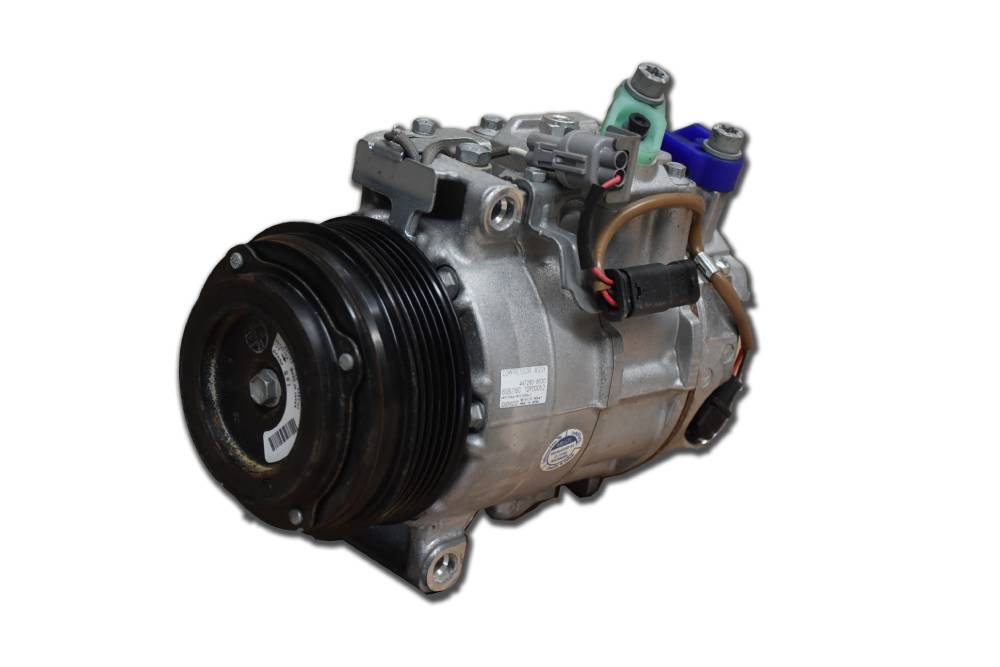
Before jumping into causes, it helps to understand the basics. The compressor clutch is an electromagnetic device mounted on the front of the compressor. It has three main parts:
- The pulley, which spins freely on a bearing whenever the engine is running, driven by the serpentine belt.
- The clutch plate (or armature), which is connected to the compressor shaft.
- The electromagnetic coil, which sits behind the pulley and creates a magnetic field when energized.
When you press the AC button, the system checks several conditions. If everything passes, it sends power to the coil. The coil creates a magnetic field that pulls the clutch plate against the spinning pulley. This locks the compressor shaft to the pulley, and the compressor starts pumping refrigerant.
If power never reaches that coil, the clutch never engages.
Cause 1: Low Refrigerant Level
Why It Matters
This is the number one reason for a clutch that will not engage. Your AC system has a low-pressure safety switch (and sometimes a high-pressure switch) that monitors refrigerant pressure. If the pressure drops below a certain threshold, the switch opens the circuit and prevents the clutch from engaging.
This is a safety feature. Running a compressor with insufficient refrigerant starves it of lubrication since the refrigerant carries oil through the system. The switch protects the compressor from seizing.
How to Check
- Connect a manifold gauge set to the low-side and high-side service ports.
- With the engine off, check the static pressure. A properly charged system typically shows 80-120 PSI on both sides at ambient temperature.
- If the low side reads below 25-30 PSI, the system is too low for the pressure switch to allow clutch engagement.
The Fix
If refrigerant is low, there is a leak somewhere. Simply adding refrigerant without fixing the leak is a temporary band-aid. Have the system leak-tested with UV dye or an electronic leak detector, repair the leak, evacuate the system, and recharge to the manufacturer’s specification.
Cause 2: Blown Fuse
Why It Matters
The AC compressor clutch circuit is protected by a fuse, typically in the under-hood fuse box. If this fuse blows, no power reaches the relay or the clutch coil.
How to Check
- Locate the AC compressor fuse. Check your owner’s manual or the fuse box cover diagram.
- Pull the fuse and inspect it visually or test with a multimeter for continuity.
- Also check any related fuses for the AC control module or blower motor, as some systems share circuits.
The Fix
Replace the fuse with one of the same amperage rating. If the new fuse blows immediately or shortly after, there is a short circuit in the wiring that needs to be traced and repaired. Do not install a higher-amperage fuse as a workaround. That defeats the overcurrent protection and creates a fire risk.
Cause 3: Faulty AC Relay
Why It Matters
The AC relay is a small electromechanical switch that the climate control system uses to send battery voltage to the compressor clutch coil. When the relay fails, it cannot pass power through to the clutch even though the control signal is working.
How to Check
- Locate the AC compressor relay in the fuse box. Your manual or the fuse box diagram will identify it.
- Swap it with an identical relay from another circuit (such as the horn relay) and test the AC.
- Alternatively, use a multimeter to test the relay coil resistance (typically 50-80 ohms) and check if the contacts close when 12V is applied to the coil pins.
The Fix
If swapping the relay restores clutch engagement, replace the faulty relay. Relays are inexpensive and available at any auto parts store. Keep in mind that a relay failing repeatedly can indicate an underlying electrical issue drawing too much current.
Cause 4: Failed Clutch Coil
Why It Matters
The electromagnetic coil itself can fail. The wire inside the coil can break (open circuit) or short internally. When the coil cannot create a magnetic field, the clutch plate has nothing pulling it into the pulley.
How to Check
- Disconnect the electrical connector at the compressor clutch coil.
- Use a multimeter to measure the resistance across the two coil terminals.
- A good coil typically reads between 3 and 5 ohms, though this varies by application. Check the service manual for your specific vehicle.
- An open reading (infinite resistance) means the coil wire is broken. A very low reading (near zero) indicates an internal short.
The Fix
The clutch coil can often be replaced without removing the entire compressor. On many vehicles, the coil slides off the front of the compressor after removing a snap ring. However, if the coil has failed due to age, the clutch bearing and plate may also be worn. In that case, replacing the entire clutch assembly is more cost-effective than piecemeal repairs.
Cause 5: Faulty Pressure Switch
Why It Matters
The low-pressure and high-pressure switches are safety devices that interrupt the clutch circuit when pressures are outside the safe operating range. A pressure switch can fail in the open position, permanently breaking the circuit even when refrigerant levels are correct.
How to Check
- Verify that refrigerant pressures are within normal range using a gauge set.
- If pressures are normal but the clutch still does not engage, locate the low-pressure switch (usually on the accumulator or suction line).
- Disconnect the switch connector and use a jumper wire to bridge the two terminals in the connector. This bypasses the switch.
- If the clutch engages with the switch bypassed, the switch is faulty.
Important: Only bypass the switch momentarily for testing purposes. Running the system with a bypassed pressure switch removes a critical safety feature.
The Fix
Replace the faulty pressure switch. They are usually inexpensive and thread into the system with an O-ring seal. Some can be replaced without evacuating the refrigerant if they have a Schrader valve at the port.
Cause 6: Wiring or Ground Problems
Why It Matters
The clutch circuit includes wiring from the fuse box to the relay, from the relay to the pressure switches, and from the switches to the clutch coil. It also needs a good ground connection, usually at the compressor body or a nearby engine ground point. Corrosion, chafing, or a broken wire anywhere in this path will prevent clutch engagement.
How to Check
- With the AC turned on, use a test light or multimeter to check for 12V at the clutch coil connector. If voltage is present but the clutch does not engage, the coil or ground is the problem.
- If no voltage is present at the connector, work backward through the circuit. Check for voltage at the relay output, then the pressure switch, tracing the path until you find where voltage is lost.
- Inspect the ground wire at the compressor. Clean any corrosion from the terminal and the mounting surface.
The Fix
Repair or replace any damaged wiring. Clean corroded connections with electrical contact cleaner and apply dielectric grease to prevent future corrosion. Ensure ground connections are tight and making clean metal-to-metal contact.
Quick Diagnostic Flowchart
Use this sequence to efficiently find the problem:
- Check the fuse. Takes 30 seconds. If blown, replace and test.
- Swap the relay. Takes one minute. If clutch engages, replace the relay.
- Check refrigerant pressure. Connect gauges. If pressure is low, find and fix the leak.
- Check voltage at the clutch connector. If 12V is present, test the coil resistance.
- Bypass the pressure switch. If the clutch engages, replace the switch.
- Trace the wiring. Follow the circuit from the relay to the connector, checking for breaks or corrosion.
What If the Clutch Still Won’t Engage?
On newer vehicles, the powertrain control module (PCM) or body control module (BCM) controls AC engagement based on multiple inputs: engine temperature, throttle position, cabin temperature request, and more. A fault code stored in the PCM can disable the AC compressor as a protective measure.
If basic electrical checks all pass, scan the vehicle for diagnostic trouble codes. Codes related to the AC pressure sensor, ambient temperature sensor, or compressor control circuit can point you in the right direction.
Frequently Asked Questions
Check for voltage at the clutch coil connector with the AC on. If you have 12V but the clutch doesn’t engage, the coil is likely open (failed internally). Measure coil resistance — a reading of infinity (open circuit) confirms a bad coil. If there is no voltage at the connector, the problem is upstream in the circuit.
Yes, as a diagnostic test. Apply 12V directly to the clutch coil connector terminals. If the clutch engages and the compressor turns, the coil and clutch mechanism are functional and the problem lies in the electrical circuit feeding it. Only do this momentarily and with the pressure switch circuit intact.
Intermittent engagement is usually caused by an intermittent electrical fault — a loose connector, corroded ground, or a relay with failing contacts. It can also be caused by a borderline pressure switch that opens and closes near its threshold, especially on a system with marginal refrigerant charge.
A complete clutch assembly (pulley, plate, and coil) costs $50 to $200 for the parts. Labor for clutch replacement at a shop is typically $100 to $250 since the compressor often does not need to be removed. Total repair cost is usually $150 to $450 depending on the vehicle.
Yes. The low-pressure switch cuts out the clutch when refrigerant pressure drops below the threshold, typically around 25 PSI. A system that is marginally low may engage at cooler ambient temperatures (when static pressure is higher) but fail to engage on hot days, creating an intermittent pattern that follows weather conditions.
The vehicle is safe to drive — the clutch not engaging simply means no AC cooling. However, on some clutchless compressor designs (which run continuously), other symptoms may appear. Also, if the clutch is not engaging due to a refrigerant leak, address the leak promptly to prevent compressor damage from oil starvation.
Get the Right Parts for the Job
Whether you need a new clutch assembly, a complete compressor, or a clutch coil, using quality parts makes the difference between a lasting repair and a comeback. R & Y A/C Compressors has been supplying remanufactured compressors and clutch assemblies from our Miami facility since 1989. Every unit is tested to OE specifications before it ships.
Enter your year, make, and model at rycompressors.com, or reach out to our team for diagnostic support.