
By the Power Steering and A/C Specialists at R & Y A/C Compressors | Family-owned and operated in Miami, FL since 1989 | Last updated: October 2026
Quick Summary
The warning signs of a failing electric power steering rack are a “Steering Assist Fault” message with heavy steering, assist that drops out and comes back, more effort one way than the other, a clunk over bumps, a notchy feel near center, torn boots or corroded connectors, and a whine that follows the wheel. Because the motor, torque sensor and module are built into the rack, most of these faults end in a complete assembly, as our guide on how electric steering racks work and why they fail explains. Test battery voltage and read the steering module codes first, since low voltage alone sets the same warning, and if your truck or car has a fluid reservoir, read the signs of a failing electric power steering pump instead.
Table of Contents
- Electric Rack or Electric Pump? Know Which System You Have
- 7 Warning Signs of a Failing Electric Steering Rack
- Symptom, Cause and Test: Quick Reference Table
- Problems That Mimic a Failing Electric Rack
- What Replacing an Electric Steering Rack Involves and Costs
- Frequently Asked Questions
- Get Your Electric Power Steering Rack from R & Y A/C Compressors
Yes, and it is one of the most common patterns. Heat-related cutback, cracked solder joints and corroded connector pins all make assist drop out and come back. Capture live data or freeze-frame codes while the fault is happening, because a rack that tests fine cold can still be failing.
Yes. The rack motor draws heavy current at low speed, so a battery or alternator that cannot hold voltage sets the same warning and heavy steering as a failed rack. Test both before you buy a rack, and clean the main grounds while you are at it.
You can still steer without assist, but the effort climbs sharply at parking speeds and assist can drop out without warning. Electric racks fall back to manual steering rather than locking up, so drive only as far as you need to in order to get it repaired.
Only partly. Boots, tie rods and the external connector can be serviced on their own. The motor, torque sensor and module are built into the housing and are not serviceable in the field, so a fault in any of them means a complete remanufactured or new assembly.
It always needs an alignment, and most vehicles also need a steering angle sensor calibration or end-stop learn with a scan tool. Some makes also require the module to be configured to the vehicle, so use a shop that has a capable bidirectional scan tool.
An electric power steering rack does away with the hydraulic pump, hoses and fluid. Instead, a motor, a torque sensor and a control module are bolted to the electric rack and pinion housing, so a steering complaint can come from the mechanical parts, the electronics or the software.
Below are the seven signs your electric power steering rack is failing that owners and shops report most, what usually causes each one, and how to confirm it before you spend $1,500 or more on a replacement.
Electric Rack or Electric Pump? Know Which System You Have
Two different systems are both called “electric power steering,” and the diagnosis depends on which one your vehicle has.
- Rack-mounted EPS (electric rack): There is no reservoir, pump or hoses, and the assist motor sits on the rack itself. You will find it on the 2013–2018 Ram 1500 (and the 2019–2024 Ram 1500 Classic), the 2011–2019 Ford Explorer and many late-model cars and trucks.
- Electro-hydraulic (EHPS): A 12-volt motor drives a hydraulic pump with its own reservoir, and the rack is a conventional hydraulic rack. If you see a fluid cap under the hood, this is your system.
- Column EPS: The assist motor is on the steering column, and the rack itself is manual.
Our electric vs. hydraulic power steering comparison explains the differences in more detail. Everything below assumes the motor and module are mounted on the rack.
7 Warning Signs of a Failing Electric Steering Rack
1. “Steering Assist Fault” Warning and Sudden Heavy Steering
What it feels like: A steering warning light or a message such as “Steering Assist Fault, Service Required” or “Service Power Steering” comes on, and the wheel goes heavy at the same moment. It is worst below about 15 mph.
What causes it: The module has found a fault it cannot work around, such as a failing assist motor, a torque sensor reading out of range, an overheated module or lost communication. Low system voltage brings up the same message.
How to confirm: Load-test the battery, check charging voltage (13.5 to 14.7 volts at idle) and clean the main grounds, then read the steering module codes. If the voltage checks pass and you still have motor, torque sensor or internal module codes, the rack is almost always the problem. Our power steering assist fault guide walks through the full triage.
2. Assist that Cuts In and Out
What it feels like: The steering goes heavy for a few seconds and then comes back, usually after 30 to 45 minutes of driving, on a hot day or right after a hard bump.
What causes it: Heat, most of the time. A tired motor or module draws too much current, so the module cuts assist to protect itself (thermal cutback) and brings it back as it cools. Cracked solder joints and corroded connector pins cause the same dropouts, but they react to vibration instead of heat.
How to confirm: Drive with a scan tool connected and watch motor current, module temperature and steering torque when the fault hits. With the engine running, wiggle the harness at the rack connector. If assist drops, the connector or module is the cause.
3. Uneven Assist or Pulling Left vs Right
What it feels like: The wheel turns more easily one way than the other, or the vehicle drifts and you keep holding a correction that an alignment did not fix.
What causes it: The zero point of the torque sensor has drifted, so the module adds assist in one direction even when you are not steering. A motor that is weak in one direction, or a mechanical bind, feels much the same.
How to confirm: Rule out tire pressure, a swapped tire and alignment first. Then compare the effort to steer left and right at 5 mph on a smooth lot, and run a steering angle sensor calibration and torque sensor zero with a scan tool. If the calibration will not complete, or the pull comes back, the sensor inside the rack is at fault.
4. Clunk or Knock Over Bumps
What it feels like: A single knock through the wheel over expansion joints and potholes, often also when you reverse steering direction at low speed.
What causes it: Worn inner rack bushings, play between the pinion and the rack bar (or in the yoke that preloads them), loose inner tie rod sockets or soft rack mount bushings.
How to confirm: With the wheels on the ground and the engine off, have a helper rock the steering wheel while you grip each inner tie rod through the boot, then the rack housing. Play in the socket points to a tie rod. If the rack bar moves inside the housing, or the housing moves on its mounts, the rack is the problem.
5. Notchy, Sticky or Poor Return-to-Center
What it feels like: There is a spot, usually near center, where the wheel resists and then lets go like a catch, and the wheel does not return to center well after a turn.
What causes it: Corrosion or scoring on the rack bar where a torn boot let water in, a worn pinion bearing or yoke, or motor cogging as the magnets or bearings in the assist motor wear.
How to confirm: Lift the front end, leave the key off and turn the wheel slowly from lock to lock by hand. A catch that repeats at the same point is inside the rack. If it only shows up with the key on, the motor or module is the source.
6. Torn Boots, Grease Leaks or Corroded Connectors
What it feels like: Often nothing yet. This is the sign you find on a lift, and it is the one most worth catching early.
What causes it: The rubber bellows that seal each end of the rack crack with age or get cut by road debris. After that, every rainstorm pushes water and grit onto the rack bar and into the housing, which on an electric rack also holds the motor, the torque sensor and often the module. Corroded connector pins alone can set assist faults.
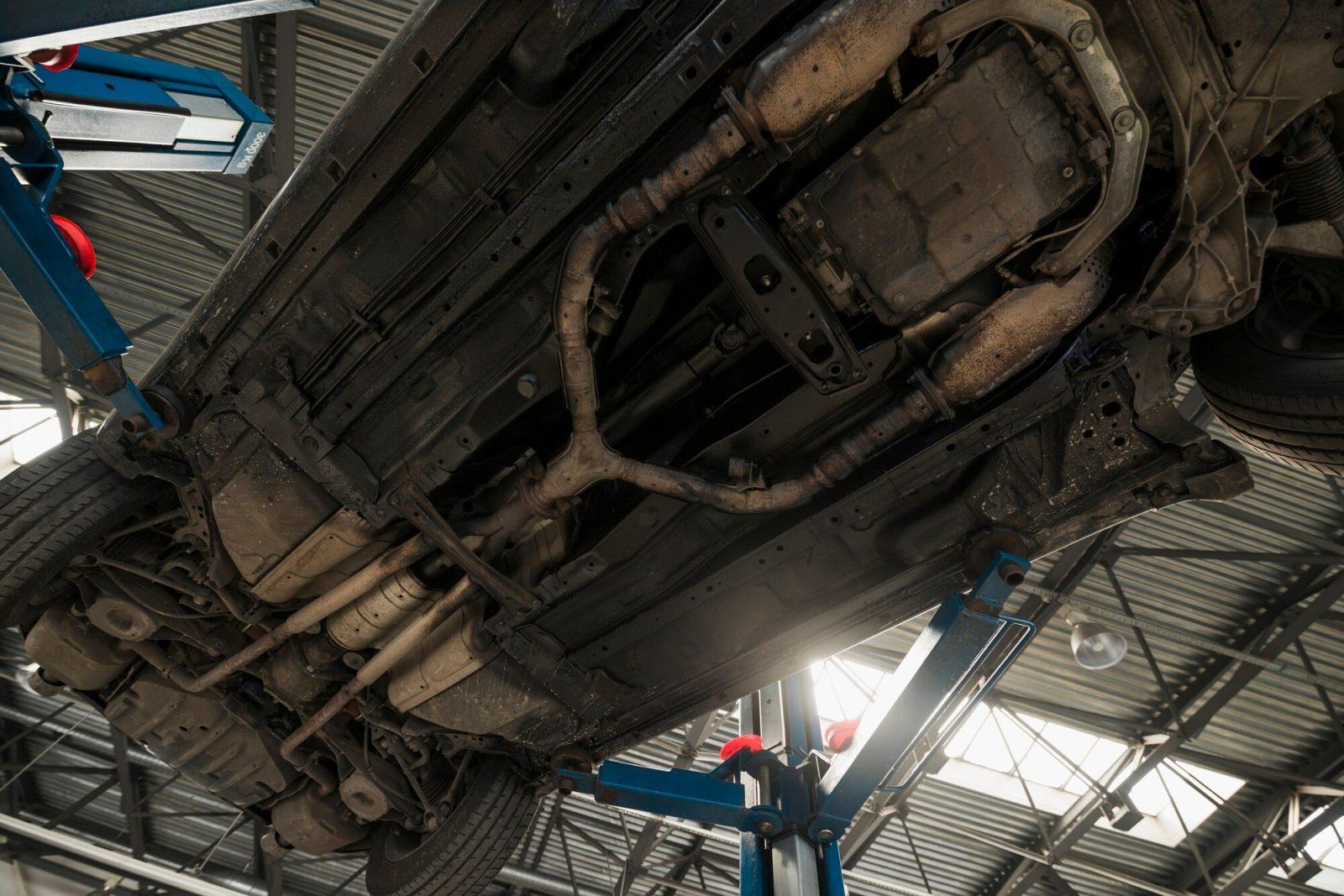
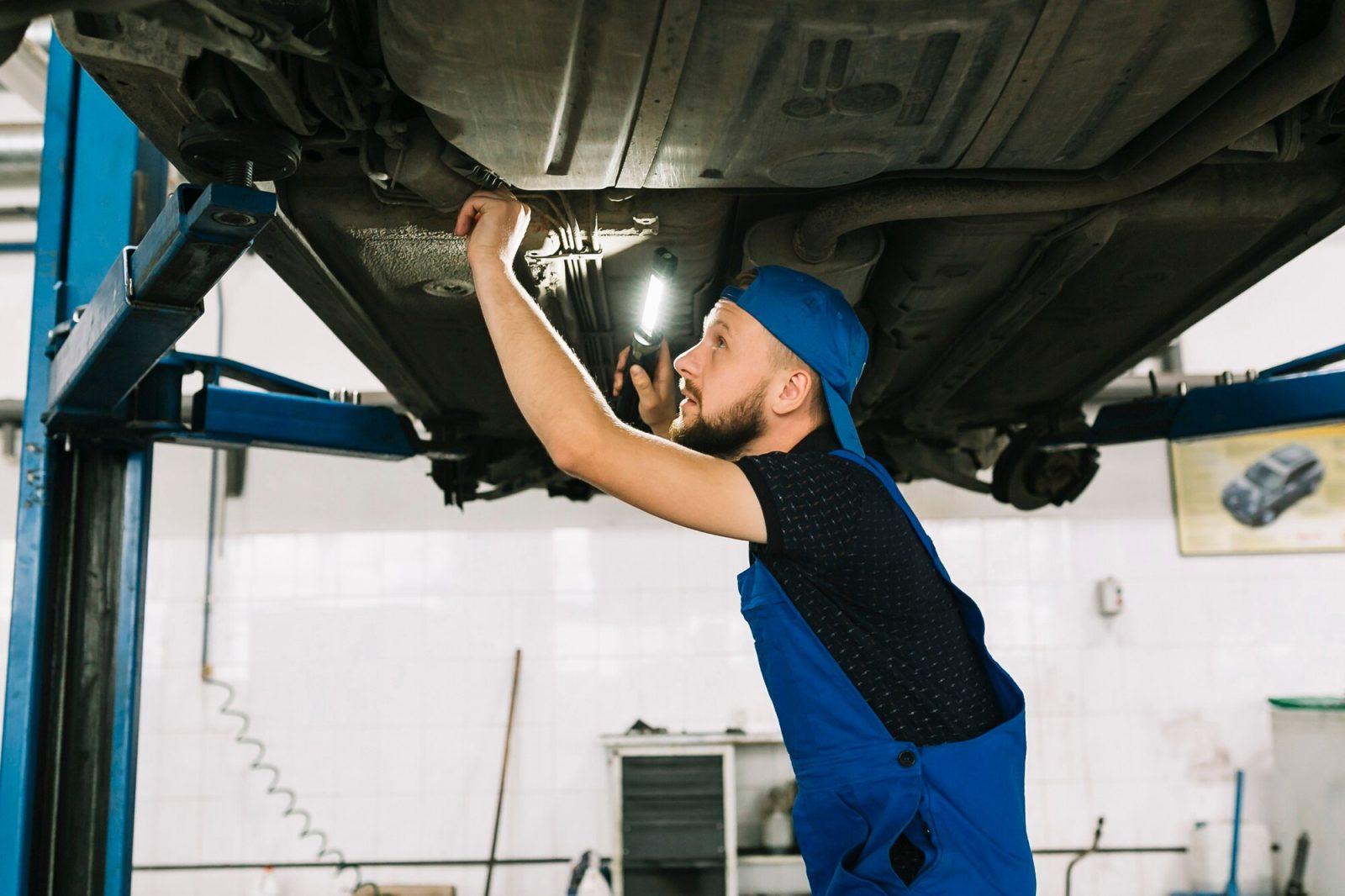
How to confirm: Look for a split boot, grease weeping past a clamp, or a rusty, pitted rack bar under the boot. With the battery disconnected, unplug the rack connector and check the pins for green or white corrosion. A rack with water inside is living on borrowed time, even if it drives fine today.
7. Whining, Grinding or Humming From the Rack
What it feels like: A whine or hum that rises and falls with how fast you turn the wheel, not with engine speed, and sometimes a growl near full lock.
What causes it: Worn assist motor bearings, a worn belt and ball nut on belt-drive racks, or a dry, rusty rack bar dragging through the housing.
How to confirm: With the vehicle on a lift, have a helper turn the wheel with the engine running while you listen at the rack, then repeat with the engine off and the key on. A whine that still follows the wheel rules out the engine and its belts.
Before you spend money on any of these, run your VIN through the NHTSA recall lookup. If an open recall or service campaign covers the steering on your vehicle, the dealer may handle the repair.
Symptom, Cause and Test: Quick Reference Table
| Symptom | Likely cause | Quick test |
|---|---|---|
| Assist-fault message, heavy steering | Low voltage; motor, torque sensor or module | Battery and charging test, then module codes |
| Assist cuts in and out | Thermal cutback; cracked solder; corroded connector | Live data during the fault; wiggle test |
| Pull or uneven effort | Torque-sensor drift; weak motor one way | Compare effort both ways; steering angle sensor calibration |
| Clunk over bumps | Inner bushings; pinion play; inner tie rods; mounts | Dry-park test; check mount bolts |
| Notchy center, poor return | Rack bar corrosion; pinion bearing; motor cogging | Hand-turn lock-to-lock, key off and on |
| Torn boots, corroded connector | Age, debris, water intrusion | Lift inspection; check pins |
| Whine that follows the wheel | Motor bearings; belt and ball nut; dry rack bar | Listen at the rack, engine on and off |
Problems that Mimic a Failing Electric Rack
These cheaper faults cause the same complaints, so rule them out first:
- Weak battery, alternator or grounds. The rack motor can pull well over 50 amps while you park. A battery that sags under load, an alternator putting out less than 13.5 volts or a corroded ground is the most common cause of false assist faults.
- Intermediate shaft, tie rod ends, ball joints and strut mounts. Worn joints clunk and feel notchy, and a seized strut bearing causes poor return to center and popping on turns.
- Alignment and tires. A pull is more often tires or alignment than the rack.
- Uncalibrated steering angle sensor. After a battery disconnect, an alignment or column repair, an uncalibrated sensor can turn on the warning even with a good rack.
What Replacing an Electric Steering Rack Involves and Costs
The motor, sensor and module are built into the housing, so the repair is a complete rack and pinion assembly. Plan on these extras as well:
- Alignment: always required.
- Steering angle sensor calibration or end-stop learn with a scan tool: required on most vehicles.
- Module configuration on some makes (Ford PMI or As-Built data, for example), so use a shop with a capable scan tool.
- Tie rods: usually not included, so inspect them and replace as needed.
Typical 2026 costs: a remanufactured electric rack runs about $800 to $1,400 for most applications, a new OE rack $1,800 to $3,500 or more, labor 3 to 5 hours ($350 to $750), alignment $100 to $200 and calibration or programming $100 to $250. That puts the total at roughly $1,350 to $2,600 with a remanufactured rack and $2,350 to $4,700 with a new OE rack. Remanufactured racks usually carry a refundable core charge, and our electric power steering rack replacement cost guide breaks these numbers down further.
R & Y Electric Rack and Pinion Coverage
R & Y remanufactures electric racks for the Ram 1500, the Ford Explorer and a few other vehicles. Fitment depends on more than the model year, so match your vehicle carefully:
- Ram 1500 (2014–2018, plus the 2019–2024 Ram 1500 Classic): AD-0200E fits Crew Cab and Quad Cab trucks whose VIN starts with 1, for about $1,390. AD-0201E fits Crew Cab and Quad Cab trucks whose VIN starts with 3 and is listed at $3,999.99. Both are 5-lug only and do not fit the Off Road package. AD-0203E (about $1,385) covers 2013–2014 Regular Cab trucks.
- Ford Explorer (2013–2015 2.0L EcoBoost and 3.5L non-turbo, plus the 2014–2015 Police Interceptor Utility): AD-0301E, AD-0300E and AD-0302E split by a September 4, 2012 build date and by Active Park Assist, at about $800. The Explorer Sport 3.5L EcoBoost is not covered.
- Other applications: AD-0601E fits the 2019 Chevrolet Silverado 1500 and GMC Sierra 1500 ($844.99), and AD-0800E fits the 2013–2015 Mercedes-Benz GLK ($1,144.99).
Tie rods are not included with any of these racks. Check your VIN, build date, cab style and wheel lug count against the product page before you order, and if your vehicle is not listed, search your year, make and model on our site or call us, because coverage keeps growing.
Frequently Asked Questions
Yes, and it is one of the most common patterns. Heat-related cutback, cracked solder joints and corroded connector pins all make assist drop out and come back. Capture live data or freeze-frame codes while the fault is happening, because a rack that tests fine cold can still be failing.
Yes. The rack motor draws heavy current at low speed, so a battery or alternator that cannot hold voltage sets the same warning and heavy steering as a failed rack. Test both before you buy a rack, and clean the main grounds while you are at it.
You can still steer without assist, but the effort climbs sharply at parking speeds and assist can drop out without warning. Electric racks fall back to manual steering rather than locking up, so drive only as far as you need to in order to get it repaired.
Only partly. Boots, tie rods and the external connector can be serviced on their own. The motor, torque sensor and module are built into the housing and are not serviceable in the field, so a fault in any of them means a complete remanufactured or new assembly.
It always needs an alignment, and most vehicles also need a steering angle sensor calibration or end-stop learn with a scan tool. Some makes also require the module to be configured to the vehicle, so use a shop that has a capable bidirectional scan tool.
Get Your Electric Power Steering Rack from R & Y A/C Compressors
R & Y A/C Compressors is family owned and operated, and we have been remanufacturing and testing automotive parts in Miami, FL since 1989. Our remanufactured electric racks are tested for noise, leaks and durability before they ship and are backed by our limited warranty.
Browse our electric rack and pinion category or enter your year, make and model at rycompressors.com to confirm fitment. You can also call us at 305-919-8864 and we will match the rack to your VIN. Hablamos Espanol. Customer service is our number one priority!